Kahn Media Report: How Automotive Aftermarket Buyers Discover & Buy Products
New research shows automotive aftermarket buyers use a dozen channels to find & purchase products, with owner reviews & seller trust outweighing price…
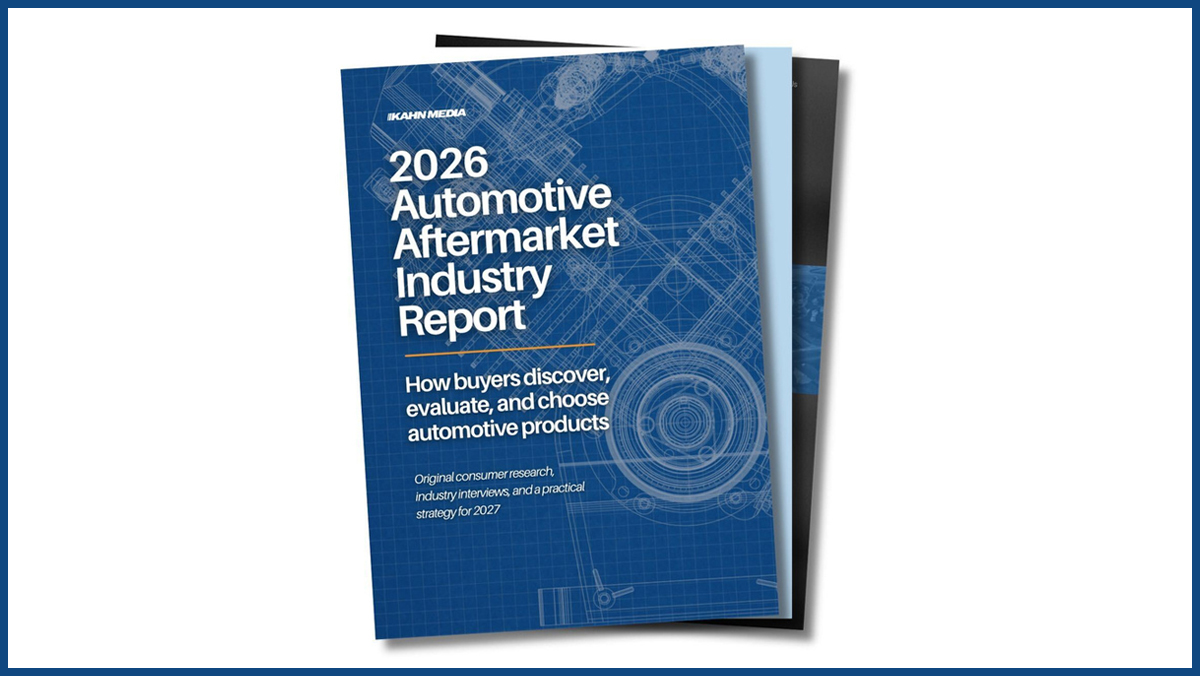
Aftermarket and performance brands have more ways to reach a buyer today than at any point in the industry’s history, according to new research from Kahn Media. Enthusiasts now discover products across a dozen different channels—from social feeds, search and word of mouth to YouTube, events, retailers and AI tools—with no single channel accounting for more than 10% of first discoveries. For brands, that means every touchpoint can be a front door, and the companies that give buyers a clear, consistent answer at each one are best positioned to win the sale, Kahn Media officials said in a press release.
The agency’s 2026 Automotive Aftermarket Industry Report, “How Automotive Aftermarket Buyers Really Shop,” combines responses from several thousand U.S. consumers with interviews from leaders at Holley Performance Brands, BluePrint Engines, Weistec Engineering, Magnuson Superchargers and Z1 Motorsports. It shows buyers building their own research path, moving between creators, product pages, owner reviews, shops and AI answers, then choosing a seller as a separate decision. The report maps where brands, retailers and installers can step in along that path and how to measure what works.
“The brands that win in 2027 won’t be the ones chasing every new channel. They’ll be the ones whose answer is the same no matter where the buyer asks,” said Dan Kahn, CEO and founder of Kahn Media. “When the creator video, the product page, the retailer listing and the AI summary all tell the same story about fitment and performance, the buyer’s confidence builds at every stop. That’s a real opportunity for any brand willing to be the clearest, most dependable answer at the moment someone is ready to decide.”
Key Findings on How Aftermarket Buyers Shop
Discovery runs through a network, not a single funnel: In the full consumer questionnaire, social feeds led first discovery at 9.5%, followed by traditional search (9.3%), word of mouth (9%), YouTube (7.8%) and AI-generated search results or standalone AI tools (7.2%). All 12 channels measured, including forums, events, retailers, brand websites and media, landed between 6.9% and 9.5%.
AI is already part of the research stack: More than one in four respondents asked an AI tool or read an AI-generated answer while researching a purchase, and AI now matches forums and nearly equals YouTube as a first-discovery source. Asked how AI helped, 52.7% said it helped them compare products, brands or sellers; 49.9% said it helped them understand a product; and 34.5% used it to check fitment. Only 2.3% said AI made them less confident.
The brand website is still the hub: Visiting the brand or manufacturer’s website was the most common research step at 42.5%, ahead of checking a retailer or marketplace (39.2%), reviews and forums (38%) and search (37.4%).
Owners are the most persuasive voice: Verified reviews from owners with a similar vehicle or use case were the top factor in final purchase decisions (39.9%), ahead of long-standing brand reputation (35.7%) and clear fitment information (34.7%). Creators work best as teachers: 35.1% said creator content helped them understand performance, fitment or installation, while 24.7% said it pushed them to complete the purchase.
Trust beats price: In the shorter questionnaire, 41.1% chose trust in the seller or authorized status as their main reason for picking a seller, more than double the 18.6% who chose lowest total price.
Brand loyalty is strong, and sellers can earn the next order: Asked about a similar future purchase, 70.3% said they would most likely stay with the same brand, including 17% who would keep the brand while shopping for a seller. Meanwhile, 44.4% either researched in one place and bought in another or researched across several places with no single main source.
What Industry Leaders Are Seeing
Industry leaders interviewed for the report described the same shift. “People go to these different social platforms because they want to hear it,” said Ryan Simmons of Holley Performance Brands. “They want to know exactly what they’re getting, or they want to narrow their choices from 30 choices down to two choices.”
“When I started as an editor at Primedia, a handful of great enthusiast titles set the agenda for the whole industry, and everyone drank from the same fire hose,” Kahn said. “Today, buyers pull from a hundred garden hoses: a creator’s install video, a forum thread, a friend at the track, a search result, a trusted magazine review and now an AI answer. That’s more doors into the conversation than this industry has ever had, and every one of them is a chance to earn a customer.”
The report translates the research into a 2027 operating plan, starting with a 90-day process to identify the costliest recurring buyer questions, fix the product information and partner handoffs behind them, and measure what changes. It also maps which party should own each buyer question, from fitment and stock to installation, when a manufacturer, retailer and shop share the same customer.
Study Methodology
Kahn Media states that its consumer research was conducted through two separate opt-in U.S. questionnaires fielded from Aug. 18 through Sept. 18, 2026: a full questionnaire and a shorter version recruited through paid Meta placements. The questionnaires differed in wording, answer choices and recruitment, and their results are reported separately. Findings describe participating respondents rather than a nationally representative sample. Industry professional responses and interviews provide additional context.
To request “How Automotive Aftermarket Buyers Really Shop,” visit the report download page.