Shop Warming Trends: Heating System Basics for Businesses
When it comes to heating work bays & customer areas, a thoughtful, targeted approach is needed for maximum comfort & efficiency...
By Richard Boothman
Richard Boothman is sales director – Heating Group, Climate Solutions at Modine Manufacturing Company. With decades of experience in the HVAC industry, Boothman works closely with Modine’s commercial heating business and has extensive knowledge of heating applications for garages, workshops and other commercial and industrial spaces.
When it comes to heating your business, a thoughtful, targeted approach is needed for maximum comfort and efficiency.
Aftermarket shop owners looking to determine the best type and placement of heating equipment for employee and customer comfort can start by looking at how each part of the building is used. Service bays have high ceilings, large doors and frequent air changes, while waiting areas and offices need quieter, more consistent comfort. Therefore, in most cases, those spaces should be treated as separate heating zones.
In the service area specifically, heaters should be positioned to replace heat where it is lost, particularly near bay doors and exterior walls, without blowing directly onto technicians or workstations. Ceiling height, door locations, vehicle lifts, ventilation requirements and required clearances all need to be considered.
A good place to start is with a qualified HVAC contractor performing a heat-loss calculation, rather than sizing the equipment based on square footage alone.
From there, a series of questions will help shops determine the best approach to solving their individual heating challenges. Richard Boothman, sales director – Heating Group, Climate Solutions at Modine Manufacturing Company, provides guidance to aftermarket businesses looking to turn up the heat this winter.
What heating fuel sources make the most sense for different areas of an auto shop, including service bays, waiting areas and offices?
Natural gas is often a practical choice for service bays because it can provide a large amount of heat at a relatively low operating cost. Where natural gas is unavailable, propane can provide similar performance.
Electric unit heaters can be a good fit for smaller areas, additions or locations where installing gas piping and venting would be difficult.
If the building already has a boiler, hydronic unit heaters may also be a cost-effective option. Waiting areas and offices typically benefit from separate equipment or zoning because their comfort needs are different from those of the shop floor.
Fuel availability, local utility rates, electrical capacity and installation costs should all be evaluated before making a final decision.
What does the commercial heating equipment market look like heading into winter? How early should shops order equipment, and what should they expect for lead times?
Demand for heating equipment naturally increases as colder weather approaches. Standard products may be readily available through local distributors, while specific sizes, fuel configurations or specialized equipment can take longer.
Shops should begin evaluating their systems during the spring or summer and place orders by late summer or early fall whenever possible. Waiting until the first cold spell reduces the number of options and can make scheduling an installer more difficult.
Lead times vary by product and region, so owners should confirm current availability with their HVAC contractor or distributor rather than planning around a general industry estimate.
What preventive maintenance should shops complete before cold weather arrives to reduce the risk of heating failures during their busiest days?
Schedule a professional inspection before the heating season begins. The technician should inspect the heat exchanger, burners, ignition components, venting, electrical connections, fan motor and safety controls.
Owners should also test thermostats, check for unusual sounds or odors and make sure nothing has been stored too close to the equipment. Gas-fired systems should be checked for proper combustion and safe venting.
What are some commonly overlooked heating issues in automotive shops, particularly those with large bay doors and frequent heat loss?
Air leakage around bay doors is one of the biggest issues. Worn seals, gaps along the floor and doors that do not close completely can allow a surprising amount of heated air to escape.
High ceilings can also cause warm air to collect above an occupied area, leaving employees cold even though the heater is running.
Another common problem is poor equipment placement. A heater may have enough capacity for the building on paper, but still leave cold areas because the airflow is blocked by lifts, storage racks or vehicles. Exhaust and ventilation systems also remove heated air, so they need to be included in the heat-loss calculation.
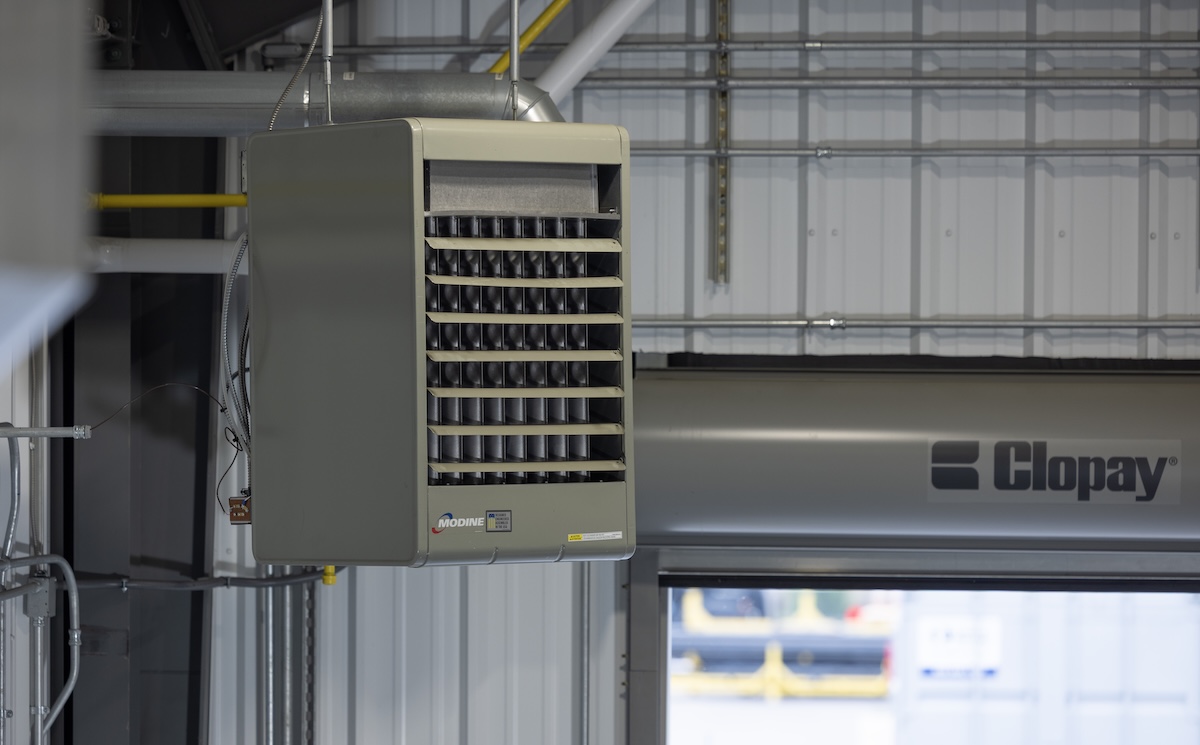
How can shops balance employee comfort with energy efficiency when doors are constantly opening and closing?
The goal is to recover quickly without overheating the entire building. Separating the service bays into their own heating zones allows the shop to maintain a practical working temperature without heating waiting areas and offices to the same level.
Destratification fans can move warm air that collects near the ceiling back toward the occupied area. Radiant heat can also be useful in certain applications because it warms people and surfaces rather than relying entirely on heated air, which can escape when a door opens.
Door seals, automatic door closers and policies that limit how long bay doors remain open can make a noticeable difference as well.
Are there heating systems or technologies that are particularly well suited for independent repair shops?
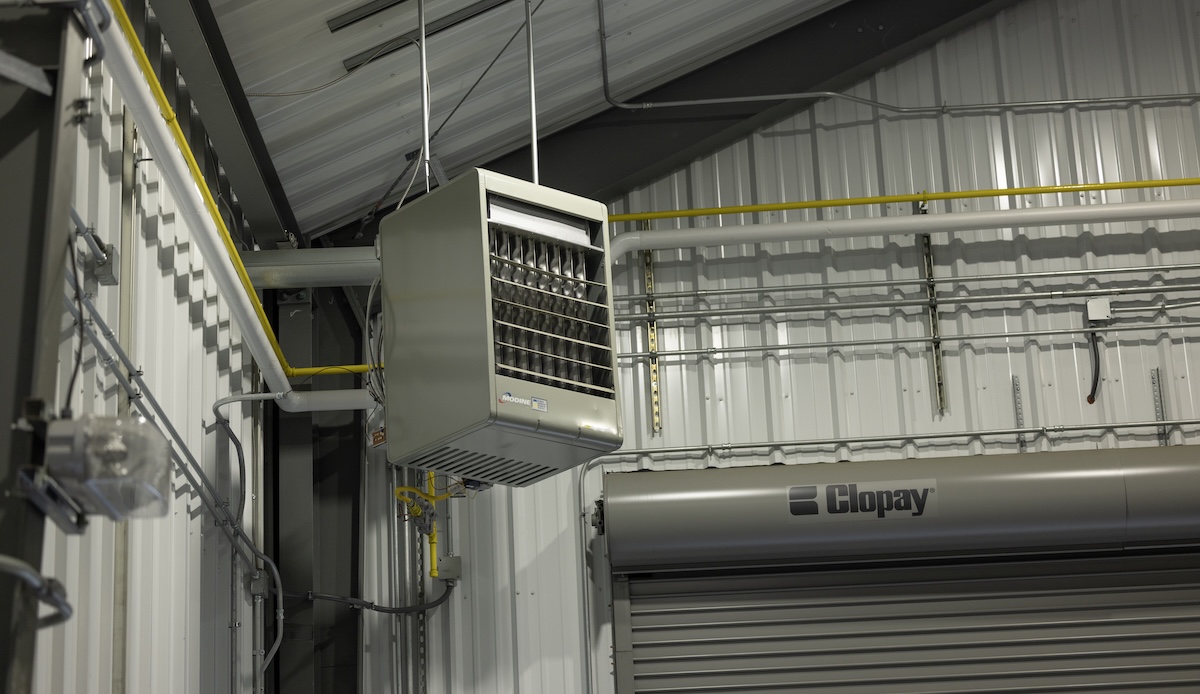
Gas-fired unit heaters are popular because they are ceiling-mounted, durable and capable of heating open service areas without taking up valuable floor space. In shops where dust, fumes or airborne contaminants may be present, separated-combustion equipment can be beneficial because it draws combustion air from outside the building.
Infrared systems can work well in high bay spaces or areas affected by frequent door openings. Electric and hydronic unit heaters may be better suited to smaller shops or buildings with the necessary electrical or boiler infrastructure.
The best system depends on the building, climate, available utilities and daily shop operations.
What warning signs indicate an existing heating system may not make it through another winter?
Longer run times, uneven temperatures and rising energy bills can all indicate that a system is losing performance. Other warning signs include frequent cycling, delayed ignition, unusual noises, visible corrosion, soot, recurring repairs or difficulty maintaining temperatures on colder days.
Owners should pay particular attention to the condition of the heat exchanger and venting system. Any suspected combustion or carbon monoxide issue should be addressed immediately by a qualified technician. If parts are becoming difficult to obtain or the shop is repairing the same unit repeatedly, it is time to discuss replacement before a complete failure occurs.
What simple steps can shop owners take now to improve heating efficiency without replacing their entire system? When does it become more cost effective to replace?
Begin with the building itself. Replace damaged weatherstripping, seal gaps around bay doors and windows, keep doors closed when they are not in use and make sure thermostats are properly located and programmed. Clean equipment, unobstructed airflow and destratification fans can also help an existing system perform better.
Replacement becomes more practical when repair costs are recurring, energy use continues to rise or the equipment can no longer maintain comfortable temperatures. Age alone should not make the decision, but it becomes an important factor when combined with declining performance, limited parts availability or safety concerns.
A contractor can compare the cost of continued repairs and energy use against the installed cost and expected efficiency of new equipment.
What is the biggest mistake independent auto shops make when preparing their heating systems for winter?
Waiting until the first cold day to find out whether the system works. By then, contractors are busy, replacement equipment may be harder to obtain and the shop has very little room for error.
A preseason inspection gives owners time to make repairs, evaluate replacement options and correct heat-loss problems before employee comfort and productivity are affected. The best winter heating plan starts before anyone needs to turn up the thermostat.