The Importance of the Work Environment in Paint Correction & Ceramic Coating
Controlling the work area before, during & after application helps detailing shops deliver repeatable finishes & avoid rework...
By Justin Glass
Justin Glass is the owner of Fort Lauderdale Precise Mobile Auto Detailing in Fort Lauderdale, Florida. He has owned and operated his detailing business since 2004, providing paint correction, ceramic coating and vehicle detailing services.
A shop can have the right polisher, pads and coating and still struggle to deliver a consistent finish. Before work begins, another part of the job needs attention: the space where the vehicle will be corrected, coated and kept during its initial cure.
Since starting my detailing business in Fort Lauderdale in 2004, I have made workspace requirements part of arranging a service. For a mobile appointment, that means discussing the available garage or covered area before arriving. For a shop, it means checking whether the assigned bay can support the entire process, including the time after application.
Those decisions belong in the estimate and schedule. Discovering an unsuitable work area after the vehicle has been prepared leaves everyone with fewer options.
Check the Surface Temperature
The weather report describes the air, not the paint. A vehicle parked in direct sunlight can arrive with panels considerably hotter than the surrounding air. Moving it indoors removes the direct exposure, but the panels still need time to cool.
Check the actual working surfaces rather than assuming the entire vehicle is at one temperature. A hood, roof and shaded door may present different conditions. Recheck as the job progresses, especially if sunlight reaches the bay through an open door.
An infrared thermometer can help, provided the operator follows its instructions for measuring distance and surface emissivity. Reflective metal and trim can produce misleading readings. The tool is useful for checking conditions against a product’s requirements; it does not replace knowing how that product should be used.
There is no single temperature limit that applies to every polish or coating. Use the manufacturer’s stated requirements and allow cooling time before beginning when the surface is outside them.
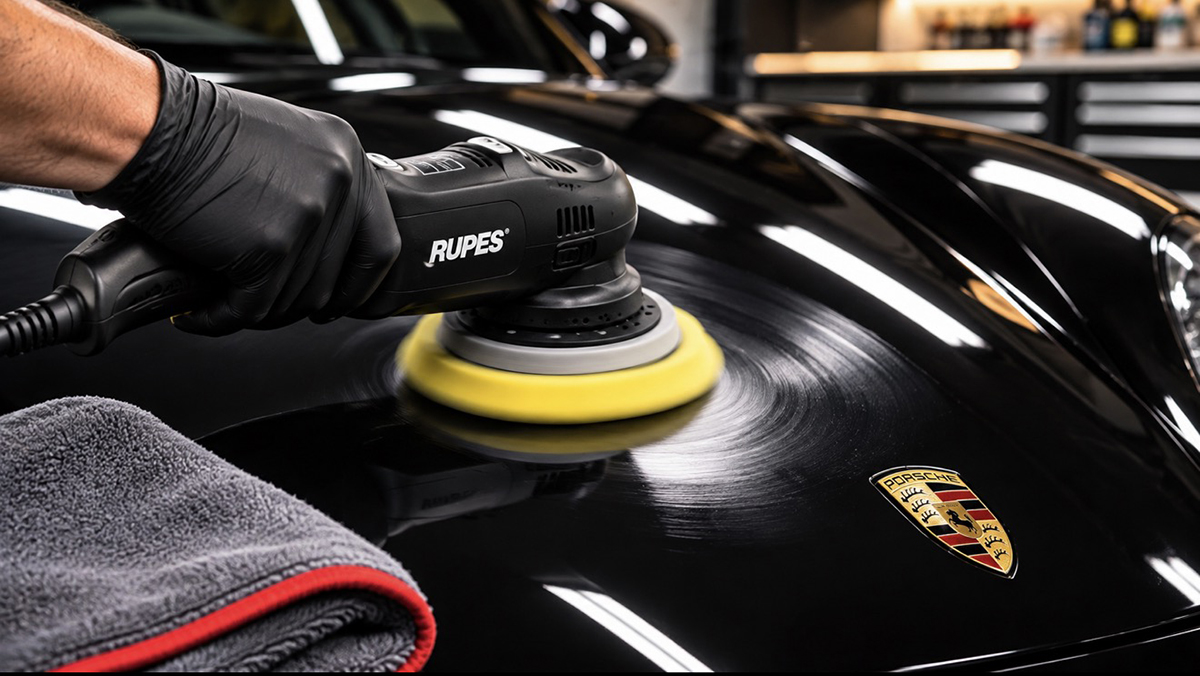
Let the Test Section Guide the Polishing
Heat can accelerate the evaporation of a polish’s lubricating components, shortening its useful working time. Residue may become harder to manage, and dusting can increase. A process that behaved well on a cool vehicle earlier in the day may need adjustment on the next one.
Start with a small test section and inspect both the result and the product’s behavior. Is the polish spreading properly? Is residue wiping away cleanly? Can the technician repeat that result across the vehicle?
Dusting alone does not prove that the panel is too hot. Pad loading, product quantity and overworking can also contribute. Check those factors before changing the process. Maintain clean pads and follow the polish manufacturer’s guidance on working time and section size.
If the conditions prevent a repeatable result, address the workspace before continuing. Adding more product or making more passes is a poor substitute for understanding why the process has changed.
Follow the Coating Instructions for That Day
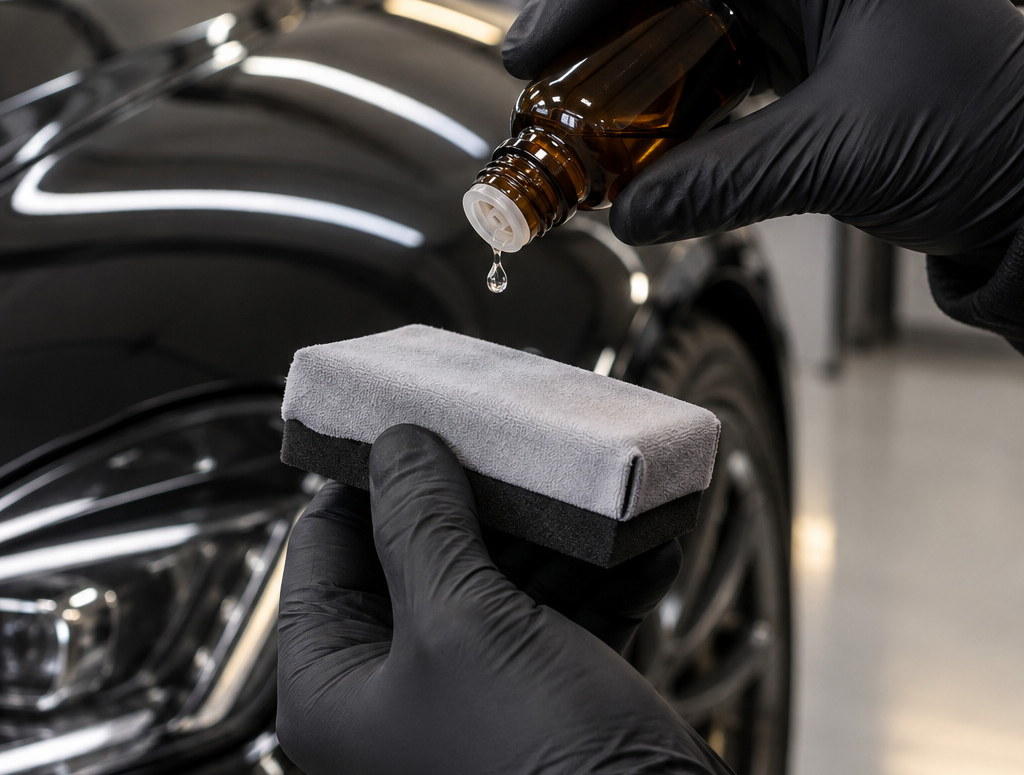
Ceramic coatings introduce another timing requirement. After a coating is spread, its carrier begins to evaporate and the product becomes ready for leveling, or removal of excess material. Detailers often call this flashing.
Temperature, humidity and air movement can affect that stage. The exact response depends on the formula. A removal time learned with one coating cannot automatically be transferred to another, and yesterday’s timing may not suit today’s conditions.
Read the current application instructions before opening the bottle. Confirm the allowed conditions, surface preparation, section size and removal method. Some products require prompt removal; others specify a waiting period or visible cue.
Begin with a manageable area to establish how the coating behaves in the actual bay. Excess coating left behind can create high spots, which may become much harder to correct once the material has cured. Build inspection into the application process rather than saving it for the end of the vehicle.
Set Up the Bay for Application & Inspection
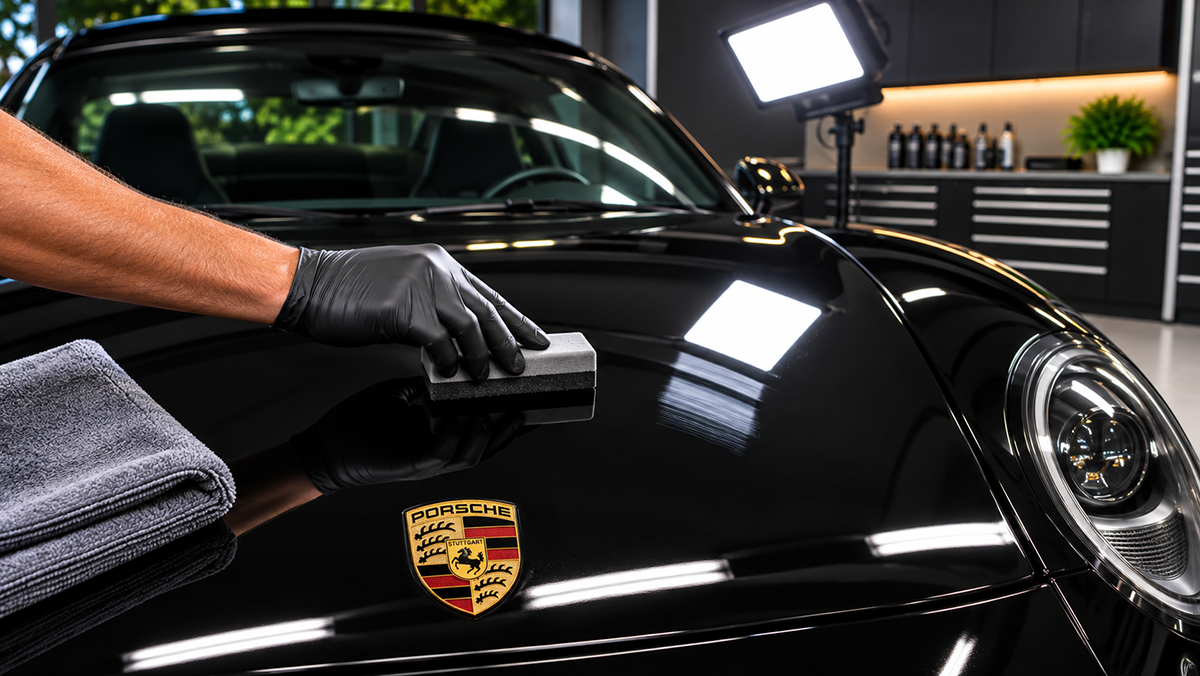
Shade is a starting point, but it does not satisfy every coating’s requirements. An outdoor canopy may be useful for some polishing work while still being unsuitable for a coating that requires indoor application and protected curing.
Lighting should serve two purposes. A focused inspection light helps reveal paint defects during correction. Broader, diffuse illumination and checks from different angles help expose uneven coating residue. A finish that looks clear from one position deserves another look before the technician moves on.
Keep towels, pads and applicators organized and protected from contamination. Avoid nearby activities that introduce dust, such as sanding or sweeping during application. After correction, complete the coating manufacturer’s required surface preparation.
Ventilation also needs planning. Follow the product’s safety data sheet for ventilation and protective equipment. Directing a fan across the paint can introduce dust and change application behavior, so airflow should be considered as part of the setup.
Know When to Change the Schedule
Before starting, decide what happens if the bay cannot meet the product’s requirements. Cooling the vehicle, moving it to another suitable space or changing the appointment time may solve the problem. If those options are unavailable, postponing the service may be necessary.
That conversation is easier when workspace requirements are explained during booking. A customer should understand that an appointment includes suitable application conditions and any required protected storage afterward.
If a vehicle is scheduled for coating late in the afternoon, consider how soon the customer must leave with the vehicle after application. Even if application conditions are suitable, the customer’s departure may conflict with the required initial cure. Resolve that conflict before preparing the paint or opening the coating.
Application and curing are separate stages. Check how long the specific coating must remain protected, when it can encounter water and when washing is permitted. Avoid issuing the same aftercare timetable for every product.
Confirm where the vehicle will stay and what the customer needs to do after collection. Provide written instructions that match the coating used, including any manufacturer guidance for early water exposure. A clear handover reduces the chance that careful application will be followed by unsuitable treatment.
Shops can also share straightforward maintenance advice: wash cool surfaces in the shade, use appropriate products and clean wash materials, and avoid letting wash solution dry on the vehicle. Customers need practical directions they can follow at home.
Record the Conditions That Affect the Result
A simple job record can capture the product used, relevant application conditions, any changes to the process and the aftercare instructions supplied. If a question arises later, the shop has something more useful than a recollection of how the day felt.
Controlling the work environment helps make results repeatable. It also gives the shop a sound basis for scheduling work and explaining delays. The bay, the application process and the handover all deserve attention before the service is promised.
Justin Glass is the owner of Fort Lauderdale Precise Mobile Auto Detailing in Fort Lauderdale, Florida. He has owned and operated his detailing business since 2004, providing paint correction, ceramic coating and vehicle detailing services.