Carb Tuning: Restoring Vintage Carbureted Engine Performance, Part I
Carburetor restoration begins by analyzing the air/fuel mixture & accounting for today’s unleaded gas blend…

This carb tuning article originally appeared in the April 2026 issue of THE SHOP magazine. Part II appeared in the July 2026 issue of THE SHOP.
Read Part II here.
Article & Photos by Henry Olsen
Editor’s note: This is the first installment in a two-part series addressing carburetor tuning issues in vintage vehicles running on today’s unleaded gasoline. Part II will be posted soon.
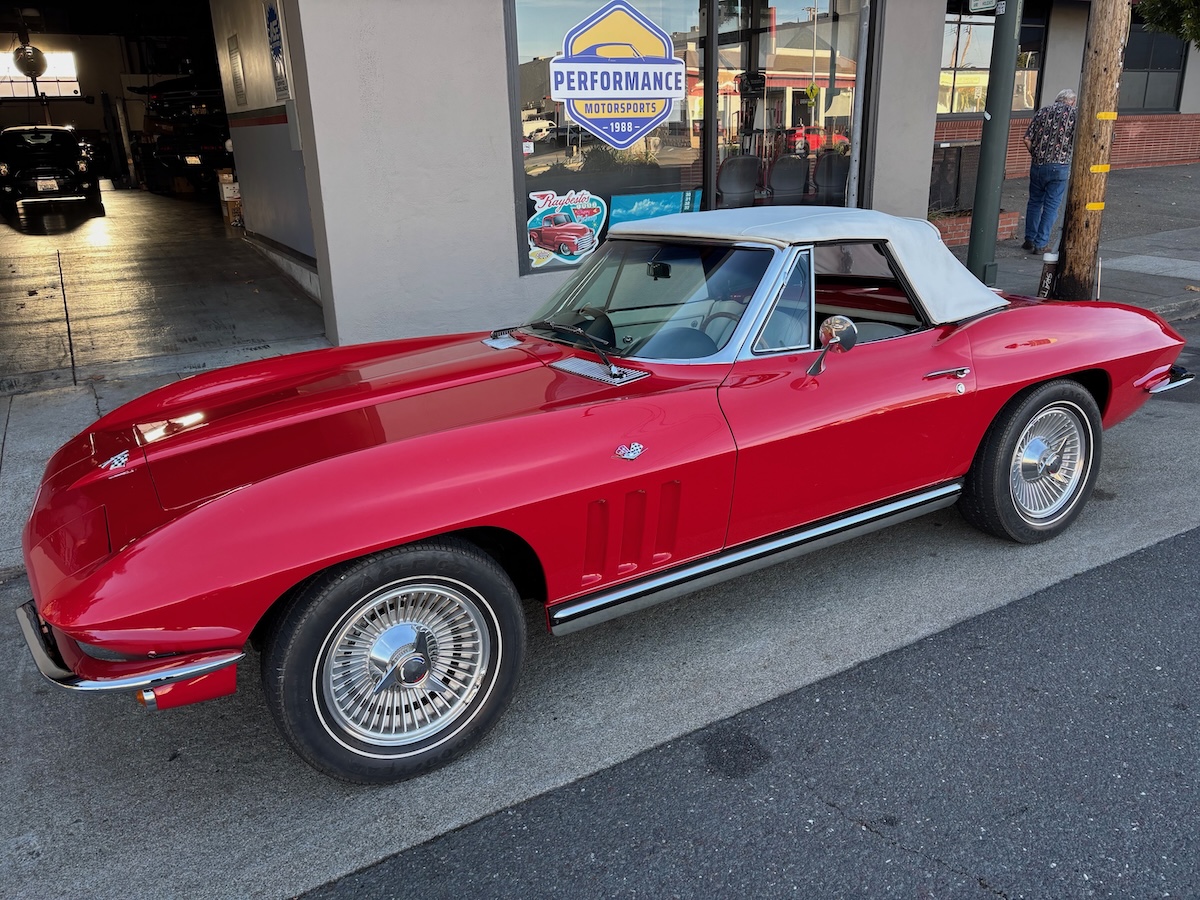
We have quite a few customers coming into our shop come with their vintage carburetor-equipped vehicles that have engine performance and drivability complaints. One of the most recent examples was a 350-hp, 327-ci small-block 1965 Chevrolet Corvette.
The car’s owner, who’s had it since 1975, came in complaining about an overall lack of power. The engine would hesitate on acceleration, she reported, and the exhaust was unpleasant to breathe in and made her eyes burn.
Most of her complaints could be traced back to today’s unleaded gasoline, which is formulated quite differently than the leaded gasoline that was sold when the vehicle was new. Owners of vintage cars and trucks from the 1950s, ’60s and ’70s enjoy both the driving experience and the attention they get whenever they are out in their classic vehicles, so they are very happy to find out we can restore the power and drivability the vehicle had back in the day.
TUNING FOR TODAY’S GASOLINE
There are many differences between the oxygenated and unleaded reformulated gasoline of today and leaded fuels from the 1950s-’70s. The burn time of the fuel is one, as is the distillation profile—but it is even more complicated than that.
These new fuels are designed to reduce evaporative emissions so they can be somewhat harder to light, but they burn faster than the leaded gasoline of days past. A good percentage of the gasoline that is available across our nation now contains ethanol and the percentage content of ethanol in each gallon of gasoline is likely to keep increasing. California has recently authorized the sale of gasoline with up to 15% ethanol, which will create even more tuning challenges for the owners of vintage carburetor-equipped vehicles.
Overall, these various gasoline formulations contain from 2% to 5% less energy and also have lower volatility than the leaded gasolines that were sold when most carburetor-equipped vehicles were built.
A modern fuel injected engine performs very well with today’s unleaded reformulated gasoline, mainly because it has a computer that is continually adjusting the ignition timing and air/fuel mixture for the lowest exhaust emissions, maximum engine performance and the highest possible fuel mileage.
Since older carburetor-equipped vehicles did not have a computer to make the needed ignition timing and air/fuel mixture adjustments for today’s gasoline, drivers will need to have both their ignition spark advance systems and air/fuel mixtures “tuned” for the gasoline that is sold today.
DIAGNOSING THE IGNITION & FUEL SYSTEM
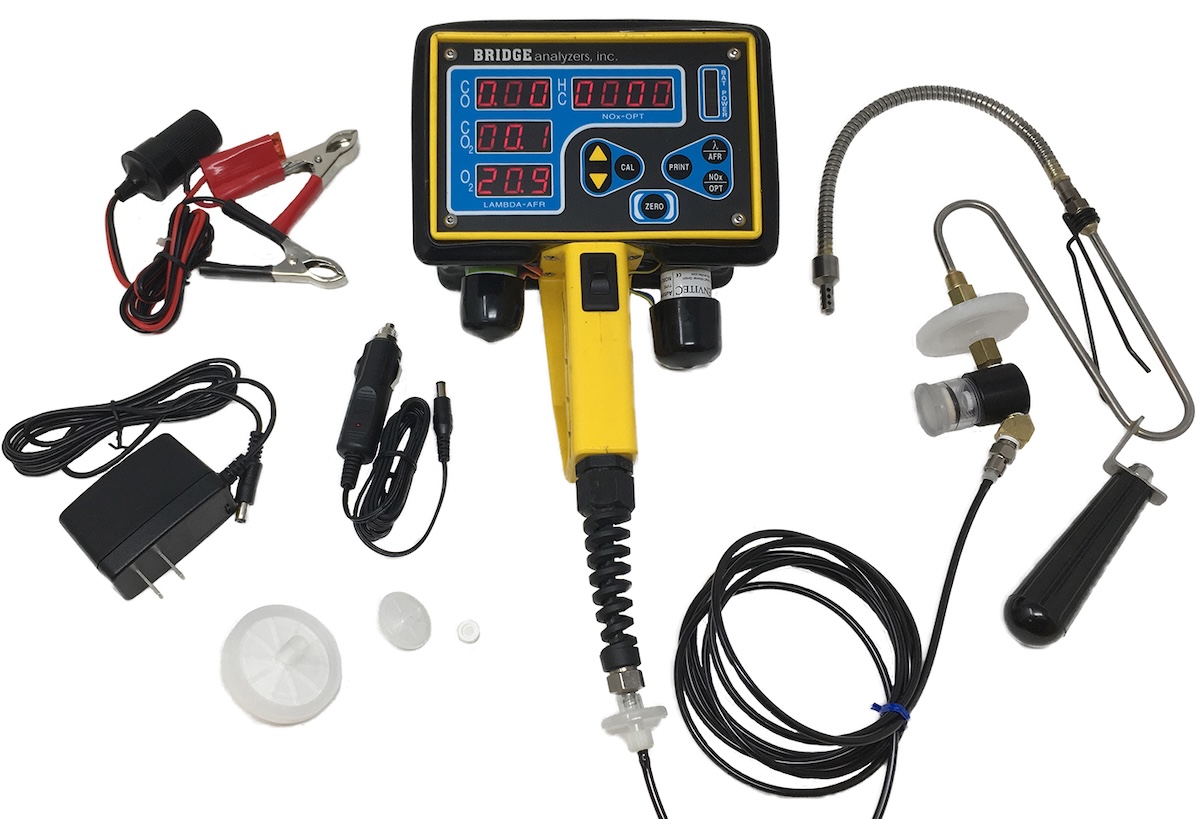
The first steps we take when diagnosing a carburetor-equipped vehicle for performance or drivability complaints is to check the air/fuel mixture with a 5-gas exhaust gas analyzer. Then we look at the ignition spark advance.
The 5-gas exhaust gas analyzer unit we use is made by Bridge Analyzers, and the readings allow us to determine the engine’s air/fuel mixture and therefore how efficiently the engine is burning the fuel. The readings we look at are CO (carbon monoxide and air/fuel mixture), HC (unburned hydrocarbons/engine misfire), NOx (oxides of nitrogen, an indicator of excessive combustion temperatures), CO2 (carbon dioxide, an indicator of combustion efficiency) and O2 (unused oxygen).
Another important step is to measure fuel pressure. Proper fuel pressure is important because too much fuel pressure will cause the carburetor to be too rich or flood, while fuel pressure that’s too low causes the carburetor to run too lean, especially during heavy throttle operation.
Fuel tank venting is also an important issue. For every gallon of fuel pumped from the gas tank, a gallon of air must get into the fuel tank through the vent system. We’ve seen quite a few vehicles where the vent system was causing vacuum to build up in the fuel tank, causing the engine to starve for fuel during high engine load driving conditions.
We’ve found that Edelbrock carburetors seem to work best with 5 pounds maximum fuel pressure, while most Holley and Rochester carbs work best with 6 pounds. It’s advisable to use a high-quality fuel pressure regulator on any carburetor-equipped engine since we are seeing a lot of high fuel problems with todays reformulated gasoline.
The results we saw on the Corvette with the exhaust gas analyzer showed that the carburetor was supplying the engine an air/fuel mixture that was too rich at idle, was lean off idle and then looked good above 2,500 rpm.
The exhaust gas analyzer also showed us the HC (hydrocarbons) readings were well above 1,500 ppm (parts per million), thus the stinky exhaust complaint. The timing was 6 degrees at idle with the vacuum advance disconnected and the mechanical advance was not operating properly. Plus, the vacuum advance was not working.
IGNITION SPARK ADVANCE
The first rule when tuning any carburetor engine for these newer blends of gasoline is to optimize the ignition advance curve(s) first. The combustion process must be started at the correct time if you expect an engine to perform as it should.
Today’s reformulated gasoline causes an engine that was tuned for leaded gasoline to need more initial timing with a slightly faster mechanical advance curve, but the total mechanical advance is about the same as it was with leaded gasoline.
The amount of ignition total spark timing advance the engine needs to perform its best changes with engine rpm, engine load and the air/fuel mixture the engine is burning. The leaner air/fuel mixtures the engine gets from its carburetor at light throttle cruise speeds burn slower than the richer air/fuel power mixture the engine gets when it’s operated at high load or wide-open throttle driving conditions. This causes an engine to need more spark advance so that it can fully burn the leaner air/fuel mixtures it has when it is operated at low-load cruise driving conditions.
Since today’s gas is somewhat harder to ignite, upgrading the ignition system to electronic ignition can be a good investment. Since the Corvette we were working on had the transistor ignition system of the day, no upgrade was needed.
The aftermarket electronic ignition system we find the most tuner-friendly are MSD Ready-To-Run distributors because they have a mechanical advance system that allows easy adjustments of both the rate and amount of spark advance.
We use a vacuum advance corrector to limit the amount of spark advance from the vacuum advance to between10-12 degrees, which we’ve found works best with today’s faster-burning reformulated unleaded gasoline. Before purchasing a new or rebuilt distributor, check that you can adjust both the rate and amount of mechanical advance and the vacuum advance systems for the needs of the engine.
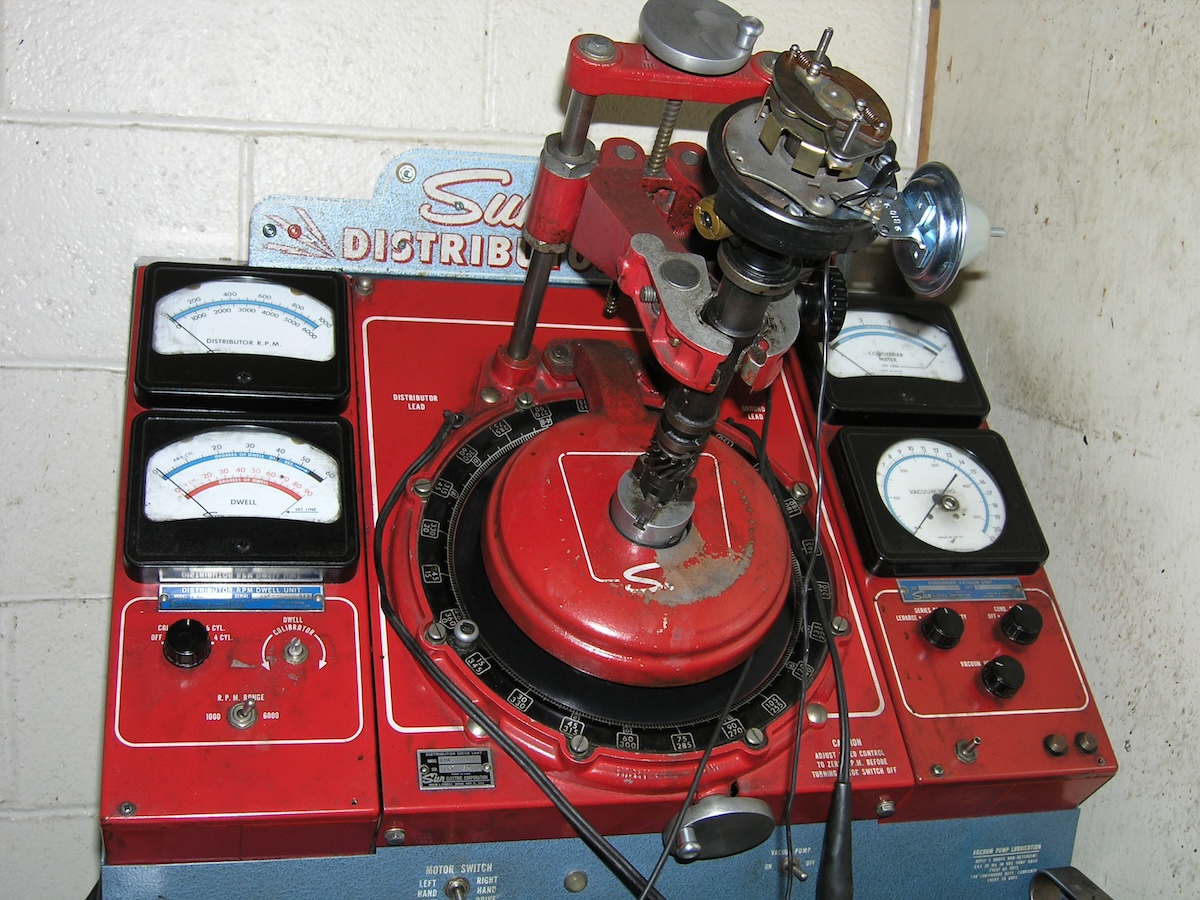
Using a dial-back timing light is a good way to read the spark advance curves while the distributor is in the engine, while a distributor test stand allows you to see the advance curves at any rpm or vacuum level.
MECHANICAL ADVANCE
The mechanical spark advance consists of three components:
- Initial advance
- The rpm-based advance rate
- The degrees of advance from the advance weights
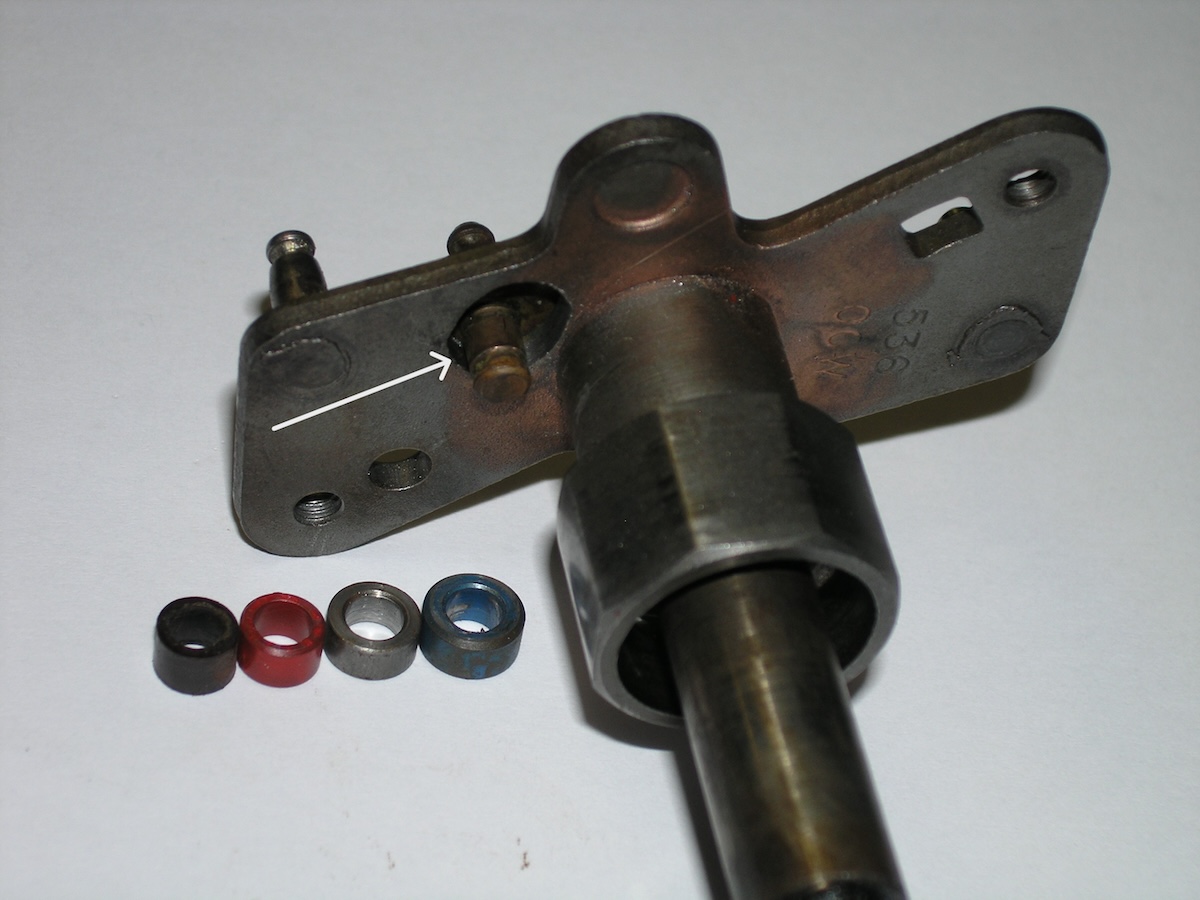
The advance rate of most original equipment and performance replacement distributors can be modified by using different advance springs, but changing the amount of mechanical advance from the distributor is not always quite as easy. The method each distributor manufacturer used to limit the mechanical advance varies from brand to brand—some are easy to tune while others can prove to be a challenge.
The guideline we use for determining what initial timing is best for an engine that is using todays unleaded reformulated gasoline is based on the engine’s camshaft. This guideline recommends:
- 10-12 degrees of initial timing when the camshaft duration is less than 220 degrees at 0.050 (mild or stock cam)
- 14-16 degrees of initial timing with less than 240 degrees
- 18-20 degrees of initial timing with less than 260 degrees
We use 12 degrees of initial timing for most vintage and muscle cars with a mild cam since the camshaft they used was well under the 220-degrees-at-0.050-valve-lift threshold.
The mechanical ignition spark advance curve we use most will cause the spark advance to be all-in by the 3,200-3,600 rpm range. This is a good starting point—you can gain power if you allow the advance to come in sooner, but risk engine damage from detonation if the advance comes in too early for the needs of the engine and the octane of the fuel.
The ignition spark advance curve as set by the advance springs should not start advancing until the engine rpm is raised above the base idle speed. The advance curve must not advance so quickly that the engine experiences detonation/ping problems.
Most vintage V-8 engines respond well to an advance curve that allows the total advance to be all-in by the 3,200-3,600 rpm range, but this will vary by the compression ratio of the engine and the octane of the gasoline.
A vintage small-block Chevrolet, Ford or Chrysler engine with 9.5-to-1 compression will, in most cases, respond well to 34-36 degrees of total ignition advance (initial timing plus the mechanical timing), but if the engine has fast-burn cylinder heads it may require less total spark advance.
The total mechanical ignition spark advance must be checked and possibly reduced when you increase the initial timing. If the total ignition spark advance needs of the engine are exceeded, the engine will be at risk of damage from the resulting detonation. Whenever you increase the initial spark advance you must remove advance from the mechanical advance system so that the engine has the same total advance.
VACUUM-BASED SPARK ADVANCE
A distributor that has both mechanical and vacuum advance systems can allow the ignition spark to be advanced when the intake manifold vacuum is high so there is more time for this leaner air/fuel mixture seen at light-throttle cruise driving. The amount of spark advance from the vacuum advance system needs to be limited to about 10 degrees, since the spark advance from the various vacuum advance units that were used back in the days of leaded gasoline varied from 10-30 degrees of spark advance.
If the engine gets too much spark advance from the vacuum advance system the engine will experience misfire problems that have often been described as “bucking” or “trailer hitching.” This over-advanced vacuum spark problem can often be heard in the exhaust as an engine misfire at light-throttle driving conditions that goes away when the vacuum advance is disconnected.
There are two different vacuum sources for a vacuum advance. The first is ported vacuum which only causes the vacuum advance to provide spark advance when the throttle is past idle speed. The second is manifold vacuum, which causes the spark advance whenever the engine vacuum is above the starting rate of the vacuum advance that is being used.
If you are using manifold vacuum as the source for the vacuum advance, the engine vacuum at idle must be at least 2 inches of vacuum above the vacuum needed for the vacuum advance to be fully advanced. As mentioned, most of the vacuum advance units that are available today were designed when there was lead in the fuel—thus, they should be limited to 10-12 degrees of advance because today’s reformulated unleaded gasoline burns faster than the older leaded fuels.
The HC (unburned hydrocarbon) readings from a 5-gas exhaust gas analyzer can be used to see what ignition spark advance setting gives the lowest misfire rate. The CO2 reading is used as an indicator of combustion efficiency—thus, the higher the reading the better the engine is burning the fuel.
The NOx reading from a 5-gas exhaust gas analyzer can be used to see if the combustion temperatures are excessive, which can result from either over-advanced ignition spark timing and/or overly lean air/fuel mixtures.
We pulled the distributor from the 1965 Corvette and looked at it on our distributor test stand. The mechanical advance system had gummed up over time, and the vacuum advance unit was bad. We recurved the distributor to supply the engine with 22 degrees of mechanical advance—the advance kicked in at 900 rpm and was all-in by 3,400 rpm. We also installed a new vacuum advance that was limited to 10 degrees.
Once the distributor was installed in the engine, we then set the initial timing at 14 degrees BTDC (before top dead center). Once the ignition spark advance curves were optimized for the unleaded gasoline with ethanol that is sold here in California, the next step was to tune the carburetor. We’ll cover that in the next article.
OUR TOOLS
- Exhaust Gas Analyzers — Bridge Analyzers
- Digital Air/Fuel Meters — Innovate Motorsports
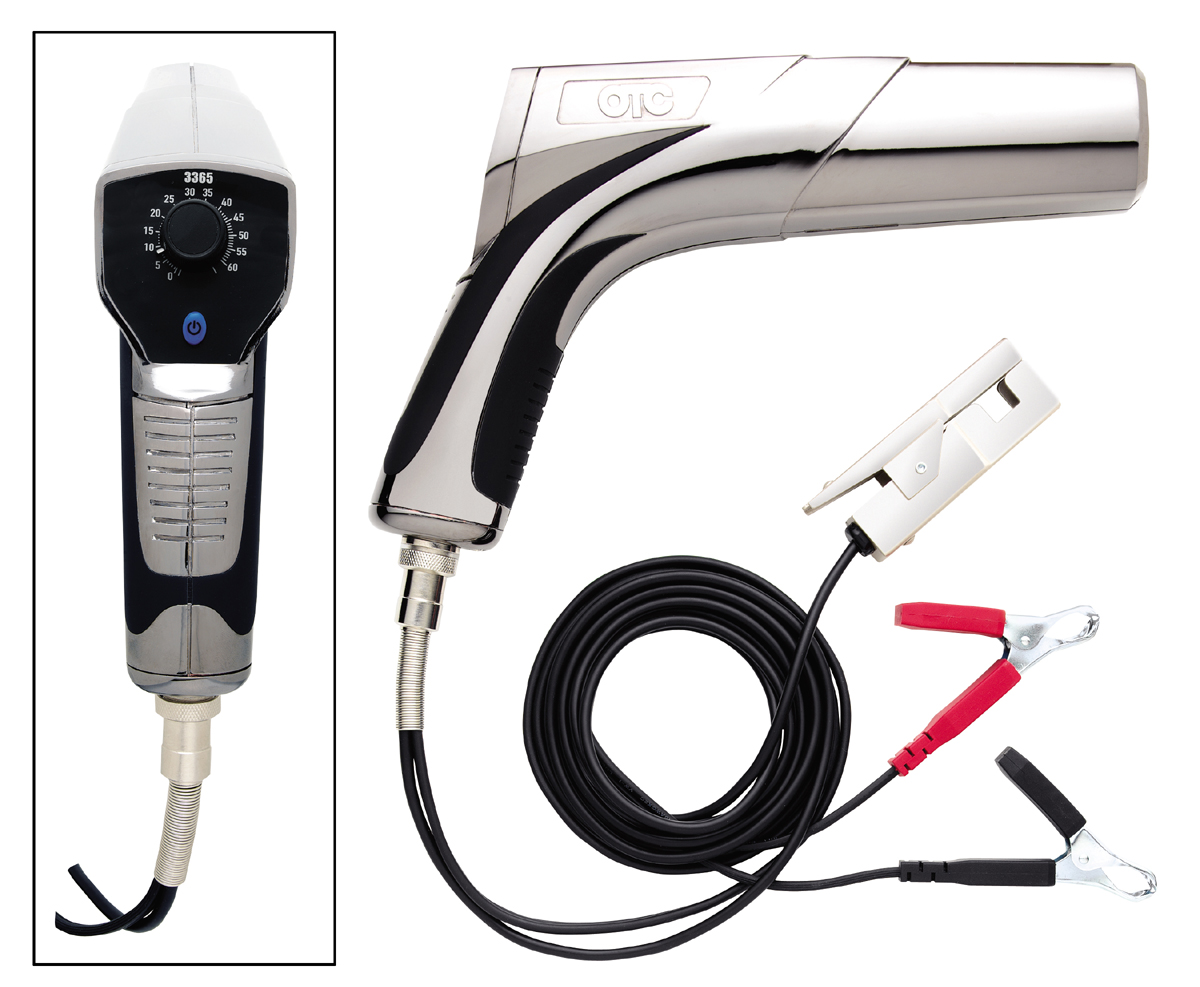
- Dial-Back Timing Light — OTC Tools
 Henry Olsen of Performance Motorsports in Millbrae, California, specializes in tuning vintage carburetor equipped engines for today’s reformulated gasoline. Reach him at [email protected].