Dreame Unveils Nebula NEXT 01 JET Edition Hypercar With Rocket Propulsion
At its Dreame Next event, Dreame Technology debuted a rocket- & EV-powered hypercar with 0.9-second 0–100 km/h acceleration & an AI-defined platform...
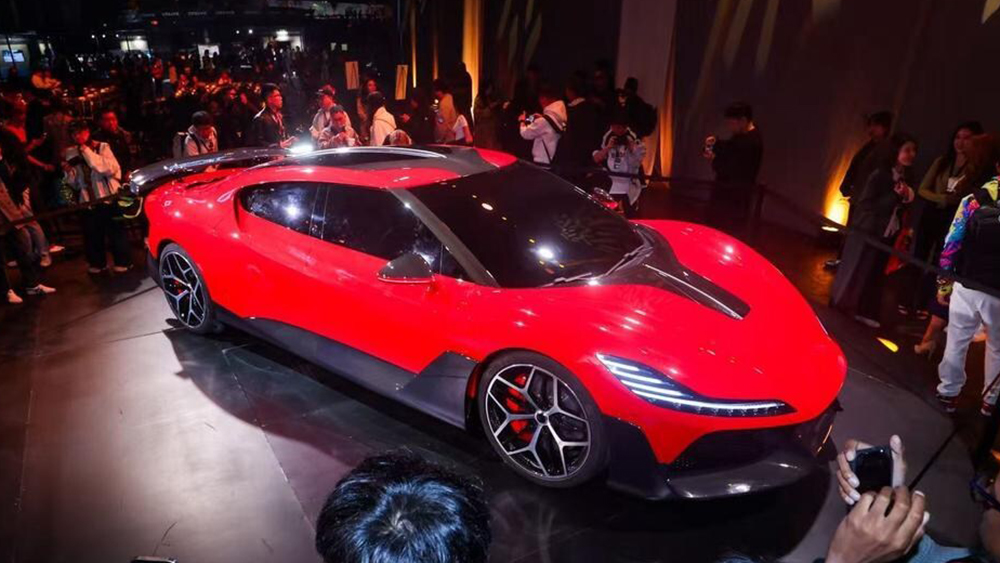
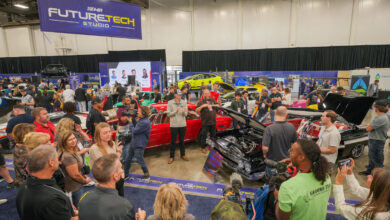
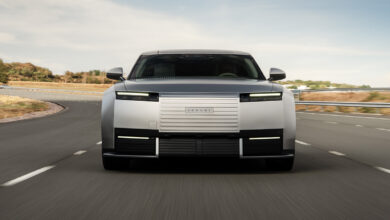
At the Dreame Next event, Dreame Technology, a global high-end technology company, unveiled a wide range of high-performance products and core technologies. The four-day showcase at the Palace of Fine Arts in San Francisco covered intelligent vehicles, smart appliances and personal electronic products. On the first day of the event, April 27, during the segment themed “DRIVE NEXT: From Transportation to Transformation,” the company officially unveiled the Nebula NEXT 01 JET Edition, a hypercar that uniquely includes both a rocket engine and an EV engine.
“In all my life, I’ve never seen a product announcement as exciting as this,” said Sebastian Thrun, the Stanford University professor widely regarded as the father of modern autonomous vehicles and founder of Google X Lab, Udacity, and Kitty Hawk, who attended the launch in person.
Rocket Propulsion & New Energy Technology Take the Stage
The launch of the Nebula NEXT 01 JET Edition highlighted several engineering milestones aimed at redefining the boundaries of mobility, company officials stated in a press release.
The new hypercar features a custom dual solid rocket-booster system. It delivers a maximum thrust of 100kN (22,481 pounds-force) with a 150-millisecond response time, achieving a 0–100 km/h (0-62 mph) acceleration in a remarkable 0.9 seconds.
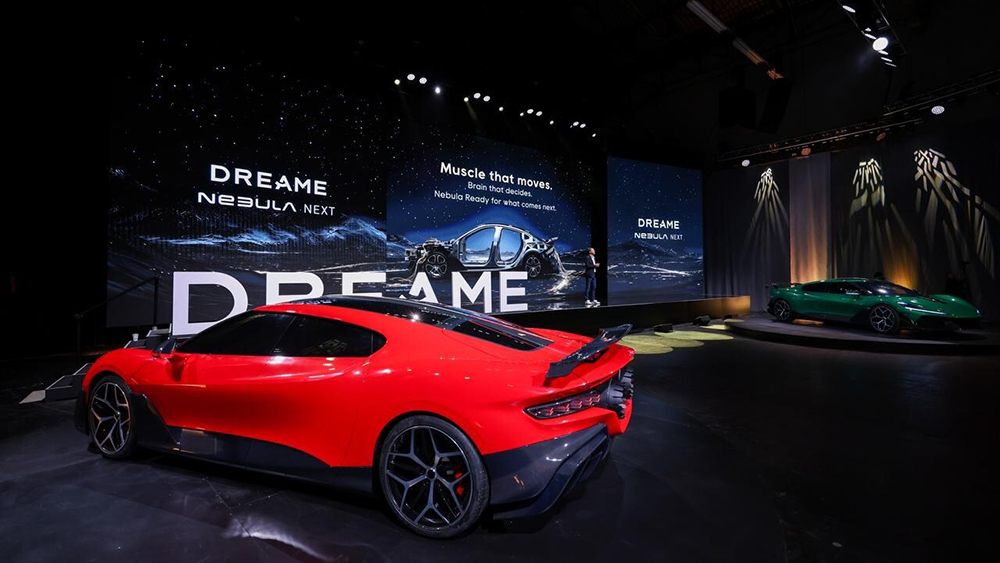
Built on a fully wire-controlled architecture and a 14-degree-of-freedom, nonlinear control system, the Nebula NEXT 01 JET Edition’s chassis offers a response time of under 1 millisecond. It utilizes electromagnetic active suspension and dry, wire-controlled braking to achieve a turning radius of less than 5 meters (16.4 feet), while reducing energy consumption by more than 50%. It also supports advanced maneuvers, like tank turns and tire-burst stabilization. The vehicle uses CTP 4.0 battery integration technology, which removes the traditional crossbeams and longitudinal beams from the battery pack to free up vertical space in the chassis.
The company also introduced a sulfide-based, solid-state battery—a mass-producible, ultra-high-capacity battery with a capacity of 60Ah (ampere-hours). In laboratory tests, its single-cell energy density exceeds 450Wh/kg. In terms of safety, the design aims to mitigate, or engineer to eliminate, the root causes of battery-related accidents. This innovation is currently entering the mass-production preparation phase, noted the release.
From Software-Defined to AI-Defined Vehicles (AIDV)
Dreame Nebula NEXT believes that the era of Software-Defined Vehicles is giving way to AI-Defined Vehicles (AIDV). To support this objective, the company introduced several new technologies.
The Metis Intelligent Agent is based on edge-side, large-model deployment. Metis evolves the smart cockpit from a command-based system into a proactive assistant that is capable of cross-device scheduling and connecting with home robotics.
The Drive Next segment also introduced Dreame’s autonomous driving platform, built on a third-generation VLA and World Model architecture. The lineup includes an L2++ solution that supports full-scenario urban navigation from parking spot to parking spot, and an L3+ solution built on a top-tier computing platform designed for fully unmanned autonomous driving.
When Dreame’s autonomous driving platform is paired with the company’s DHX1—the first LiDAR unit developed under the Nebula Next program and co-developed and customized in collaboration with the company’s core partner—it aims to eliminate driving blind spots in extreme weather or low-light conditions. Together, these technologies deliver a robust, all-weather perception capability that significantly enhances the safety and reliability of intelligent driving systems. In high-performance mode, which Dreame describes as a leap moving automotive LiDAR from point-cloud-level perception to ultra-high-definition image-level sensing, the DHX1 resolves fine details at distance: potholes, small stones, traffic signs and subtle pedestrian movements.
Dreame’s Decade-Long Path to the Nebula NEXT 01 JET Edition
Dreame’s move into smart vehicles has roots stretching back more than a decade. During the early days of the SkyAxis Program at Tsinghua University, founder Yu Hao and his team explored autonomous driving, planting the seeds for what would become the Nebula Next program. The Nebula NEXT 01 JET Edition represents the productization of more than 10 years of technology development, the company said. Dreame’s decision to build vehicles came only after the company had accumulated sufficient depth in technology, organization, capital and global capability.
Dreame says the Nebula NEXT 01 JET Edition is a statement about where its engineering can go. The company’s core technologies, including high-speed digital motors, intelligent algorithms, and bionic robotic arms, are being applied across its product ecosystem. The same engineering that pushes a high-speed digital motor to 200,000 rpm also enables breakthroughs in automotive powertrains and perception motion systems, the company said.