4 Auto Market Advancements That Moved the Aftermarket Needle at CES 2026
New tech to help shops welcome the future & continue finding opportunities for the next generation of passionate enthusiasts...
As an aftermarket professional, you’ve probably already noticed self-driving Waymo vehicles in real life, or at least on the internet, and wondered about the implications for your business.
Does the future include a market for performance and appearance upgrades for personal vehicles? Will the automotive industry continue to stir passion in drivers hoping to make an individual statement in the years to come?
With self-driving automobiles still a ways off, the specialty aftermarket continues to thrive. That was one of the messages found in the auto-related corners of CES 2026—the annual Consumer Electronics Show that highlights the latest tech, gadgets and trends, including those that are helping shape the driving experience.
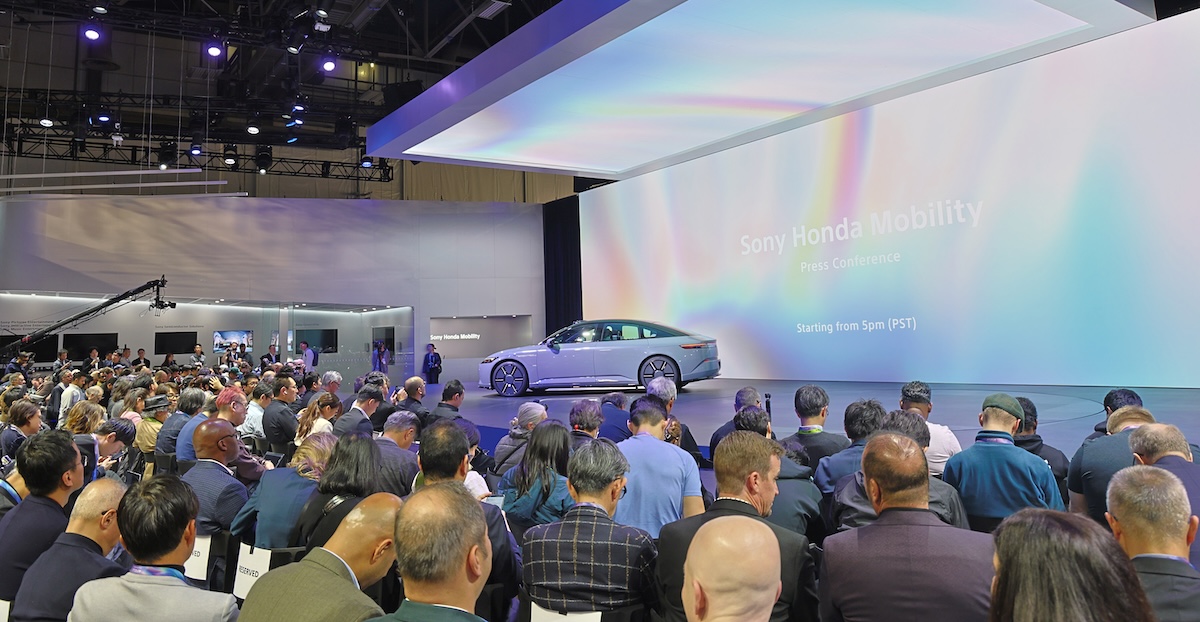
The show was held back in January, and as proof of how fast the market moves, a Sony Honda Mobility joint venture to build autonomous vehicles called AFEELA 1 took center stage. By March, however, the effort had been tabled.
Regardless, at least some of the information released at the show should be on every aftermarket shop’s radar, so we can welcome the future and keep finding opportunities for the next generation of passionate enthusiasts. As a start, here are five interesting developments that emerged from CES 2026.
ALMOST SELF-DRIVING
You can’t hear about the world of AI without hearing about NVIDIA and how the company is primed to be one of the most important players in the space. From its hardware to software, NVIDIA is synonymous with AI tech.
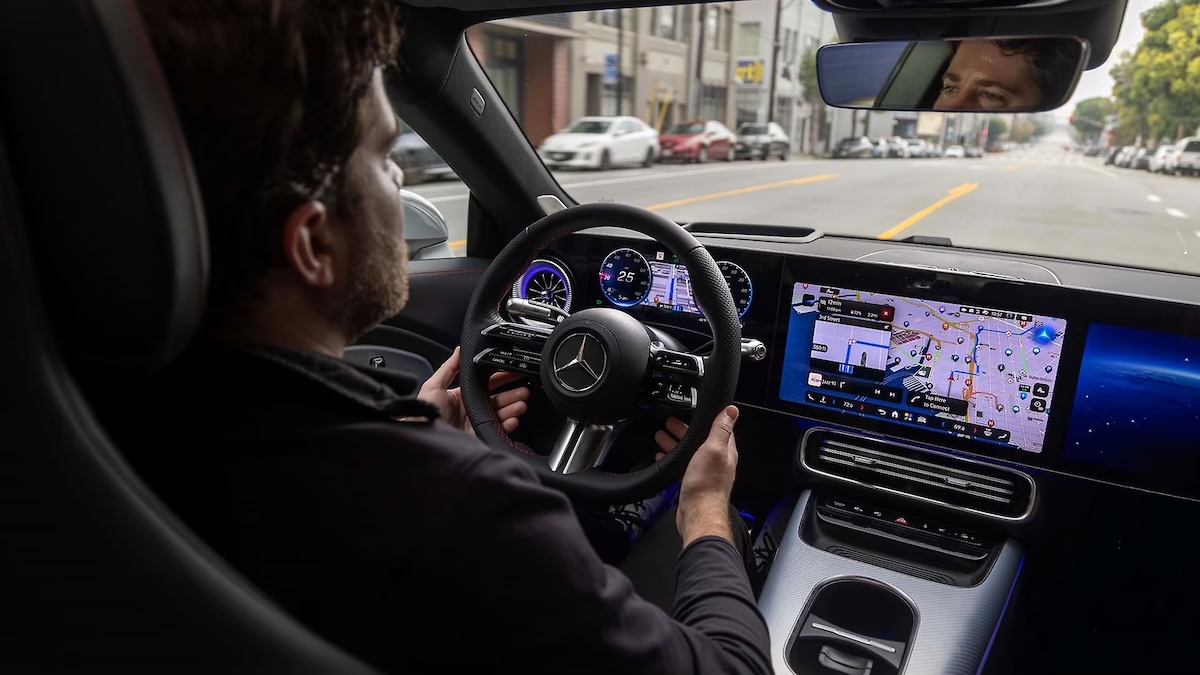
The company has been tied to OEM automotive suppliers for years. The new Mercedes-Benz CLA will be the three-pointed star’s first vehicle featuring the MB.OS platform that is powered by NVIDIA. This means the new CLA has what’s called Level 2++ autonomous driving capability. Even in dense city traffic, the demo shows the CLA driving itself around—avoiding pedestrians and vehicles that are opening their doors for driver’s to get out.
“As the automotive industry embraces physical AI, NVIDIA is the intelligence backbone that makes every vehicle programmable, updatable and perpetually improving through data and software,” says Ali Kani, vice president of automotive at NVIDIA. “Starting with Mercedes-Benz and its incredible new CLA, we’re celebrating a stunning achievement in safety, design, engineering and AI-powered driving that will turn every car into a living, learning machine.”
According to Mercedes, with MB.Drive Assist Pro, driving assistance and navigation merge to create a completely new and safe driving experience.
“At the press of a button, the vehicle can assist the driver navigate through the city streets—from the parking lot to the destination—with advanced SAE-Level 2 assistance,” the company states in a press release outlining the new tech. “Thanks to Mercedes-Benz’s cooperative steering approach, steering adaptations are possible at any time without deactivating the system.”
The systems are very cool to see firsthand—imagine GM’s SuperCruise or Ford’s BlueCruise operating on difficult-to-navigate city streets. Or Tesla’s Full Self Driving subscription, but with extra sensors.
The Mercedes/NVIDIA system will cost $3,950 for three years in the United States. Customers can also choose a monthly or yearly subscriptions, but no word on those pricing options yet.
FORD & AI
Ford is one of the first automakers to show how AI can help its customers navigate through life easier.
“What if your vehicle actually knew you?” asked Mike Aragon, Ford of president of integrated services, at the brand’s press conference. “A truly thoughtful, integrated AI experience shouldn’t be a luxury. It should be as expected and seamless as pulling up directions on your phone or streaming a song. So, we asked ourselves, ‘What if we could build an assistant that truly understands your specific vehicle, anticipates your needs and becomes an intelligent thread woven throughout your Ford experience?’”
The answer is the Ford AI assistant, which Aragon called “a deep, personalized intelligence that knows your specific vehicle, understands your unique needs and anticipates your desires on every journey.”
So, what does that look like in real life?
“Imagine you’re at the lumber yard staring at a stack of firewood— cords, half-cords, bundles—ready to load up. Instead of guessing or using a tape measure, you snap a photo on your phone and ask: ‘How much of this will fit in my truck bed?” he explains. “Within seconds, the assistant analyzes the stack, estimates volume and translates it into real terms—how many bundles or what fraction of a cord—based on your Ford truck’s exact bed length and tie-down configuration. It’s a seamless experience that blends Ford-specific vehicle knowledge with the job in front of you, even if you’re nowhere near the truck.”
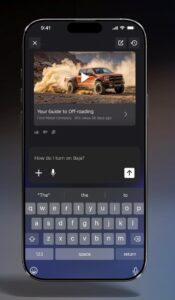
The technology can also be used to ask questions such as “How do I prep my truck for off-roading?” to help drivers maximize their vehicle’s utility and performance.
The Ford AI assistant will arrive within the Ford app later this year. In 2027, the Ford AI assist will be built into the infotainment screen.
CONTROL BY A FLICK OF THE WRIST
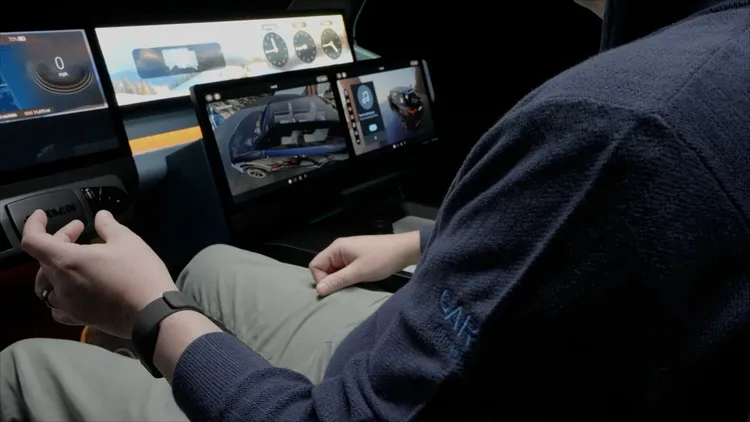
A while back, I got a tour from Bose and Ferrari of new technology that would allow the user to adjust the radio’s volume by gesturing. BMW took it to the next level, allowing drivers to change volume and radio station through gesturing. Now, Meta has partnered with Garmin to come up with a wristband that allows users to control infotainment without the struggle of reaching for the touchscreen.
The Meta Neural Band allows passengers to control select vehicle infotainment functions with gestures sensed by the band using the thumb, index and middle fingers. The initial concept sets the stage to introduce new interaction methods for displays and vehicle functions while delivering a true lean-back entertainment experience for multiple passengers.
“Meta Neural Band and its EMG technology could be the best way to control any device,” predicts Alex Himel, VP of wearables for Meta. “Once you start using the band regularly, you want it to control more than just your AI glasses. We’ve already developed prototype experiences for the band to control devices in your home, and it’s been great to team up with Garmin to showcase its potential in your car.”
The wristband detects small neural signals from your wrist muscles and translates them into digital actions. It’s true no one really wants to do anything extra to use technology, but slipping on a wristband can be easier than buckling a seatbelt.
Eventually, sensor technology will become so good that no wristband will be needed. Once learned, it will be much easier than digging though menus on an infotainment screen.
CHINA—LOOK, BUT DON’T TOUCH
The market shouldn’t sleep on China’s ability to build great electric vehicles. There are some phenomenal EVs offered in China that cannot currently make their way to U.S. shores because of tariffs.
At CES, Geely Holding Group displayed and offered test drives for its Zeekr, Lynk & Co and Geely vehicle lines, including the Zeekr 009 full-electric luxury van and Zeekr 9X plug-in hybrid flagship SUV, which is a rival to Range Rover. Because Geely has the unique advantage of owning Volvo and Polestar, which already have a presence in the United States, reports say a Geely model could be available for sale here in the United States in the next two to three years.
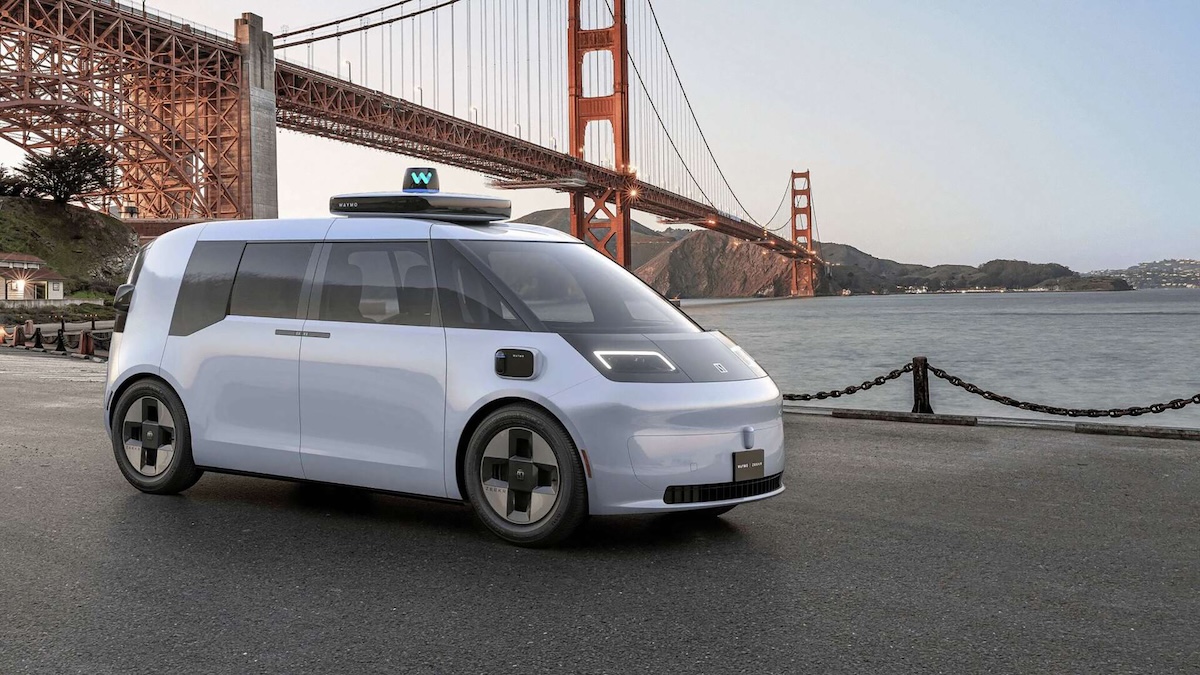
There’s also an interesting partnership between Zeekr and Waymo. Zeekr showed a new robotaxi that can replace the aging Jaguar iPace platform. In China it is known as the Zeekr C1Me and here it will be called the Waymo Ojai—thus giving a subsidiary of Google its own car.
Waymo has not said which cities may see the new van first, but it features 13 cameras, six radar sensors and four lidar sensors. Moreover, as it is designed as a boxy cube, it will offer more interior room to sprawl out and haul luggage.