20th Annual La Jolla Concours d’Elegance Spotlights ‘Icons of Speed’
The event will feature a Jaguar D-Type, Ford GT40 Mark III & Ferrari 250 GT LWB Tour de France among its "Icons of Speed" field April 24–26 in California...

As the La Jolla Concours d’Elegance marks its 20th anniversary, this year’s event turns its focus to “Icons of Speed,” a theme that celebrates the machines that defined performance, endurance and design throughout the 20th century, event organizers stated in a press release.
Set for April 24–26, 2026, at Ellen Browning Scripps Park in La Jolla, California, the Concours brings together a curated field of historically significant automobiles. Among them, three standout entries in the event’s featured class offer a compelling cross-section of postwar competition history, noted the release.
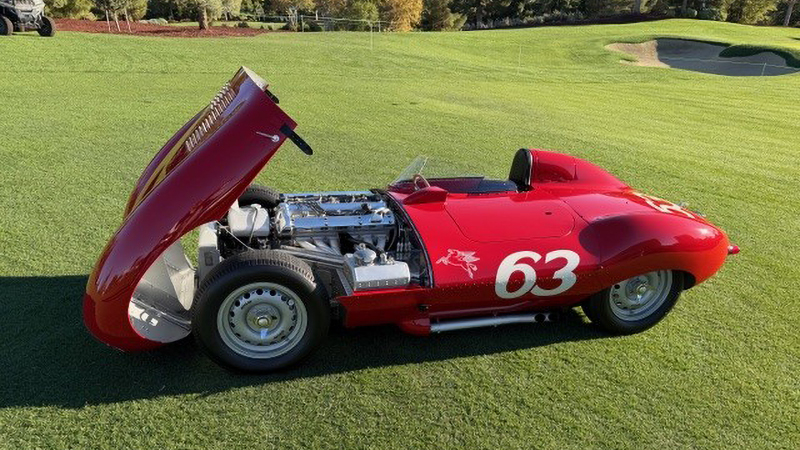
Jaguar D-Type (XKD 522)
The Jaguar D-Type model secured three consecutive victories at Le Mans between 1955 and 1957. Produced at Jaguar’s Browns Lane factory in 1955, it was delivered to Charles Hornburg’s Los Angeles dealership. The XKD 522 quickly entered competition in Southern California with drivers that included Carroll Shelby.
The D-Type’s monocoque construction, borrowed from aviation and Malcolm Sayer’s mathematically derived aerodynamics, marked a turning point in sports car design. With a top speed exceeding 170 mph, the model was not only dominant but transformative. The XKD 522 also competed at Torrey Pines in 1956, linking its competition history directly to the La Jolla coastline, where it will now be shown at La Jolla Concours d’Elegance.
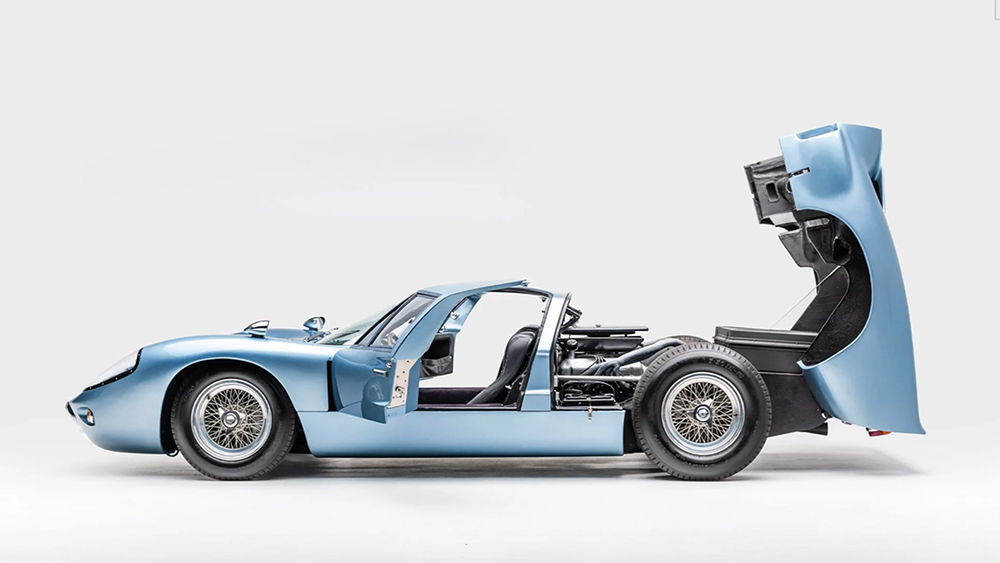
Ford GT40 Mark III (MK3 1105)
While the GT40 is synonymous with Ford’s Le Mans victories, the Mark III variant was an attempt to turn a racecar into a daily driver. One of just seven examples built and one of four in left-hand drive, chassis MK3 1105 was originally owned by famed Austrian conductor Herbert von Karajan. He reportedly kept the car in pristine condition and avoided driving it in the rain.
The Mark III introduced subtle concessions to the racecar for the sake of usability, including revised bodywork, added luggage space and a more accommodating interior, while retaining the character of the GT40. Powered by a 289-cubic-inch V-8 producing 306 horsepower, it stays true to its racing DNA despite its road-going intentions.
1959 Ferrari 250 GT LWB ‘Tour de France’ (Chassis 1321 GT)
Among Ferrari’s most celebrated competition GT cars, the 250 GT Tour de France occupies a special place in the marque’s history. Chassis 1321 GT, completed in 1959, represents the final and most developed iteration of the series.
Campaigned under pseudonyms by Belgian racing brothers Jean and Armand Blaton, known as “Beurlys” and “Elde,” the car achieved significant success. Highlights include a GT class win at the Nürburgring 1000km and a third overall finish at the 24 Hours of Le Mans.
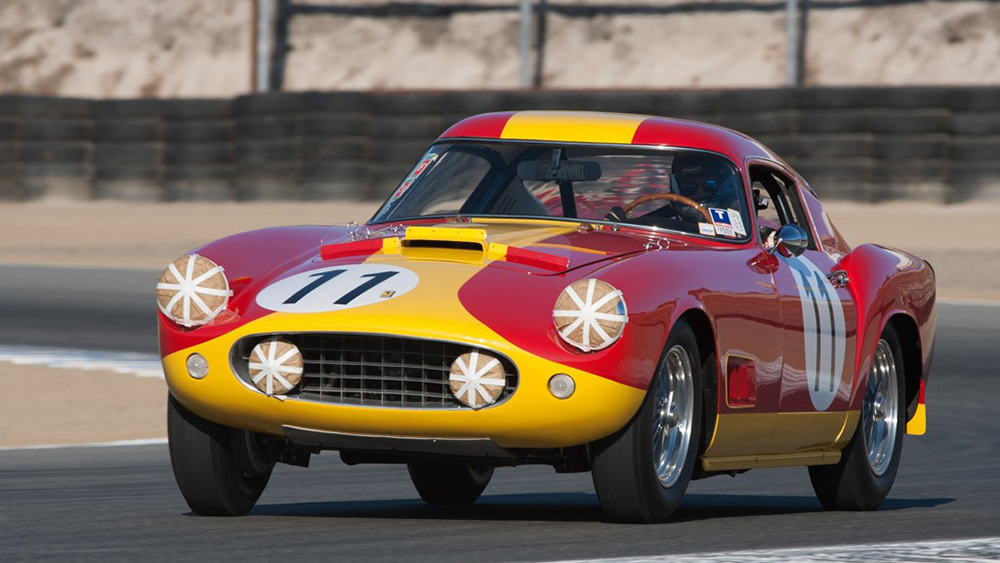
Its Scaglietti-built aluminum coachwork reflects both elegance and function, while the 2.9-liter Colombo V-12, fed by triple Weber carburetors, delivers approximately 260 horsepower. A unique oil filler door integrated into the bodywork underscores its purpose-built competition focus.
Today, it remains in its original Garage Francorchamps livery, making it both a historically significant Ferrari and one of the most visually recognizable examples of the model in existence.