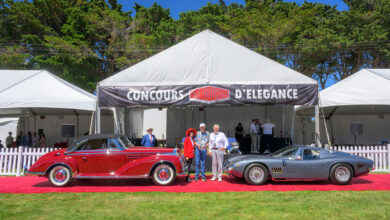
Bizzarrini’s 5300 Aperta Lusso Blends ’60s Design With Modern Engineering
The all-new, hand-built Bizzarrini 5300 Aperta Lusso pairs a removable-roof carbon body with a 400-bhp front-mid V-8 in a limited run of 10 cars...
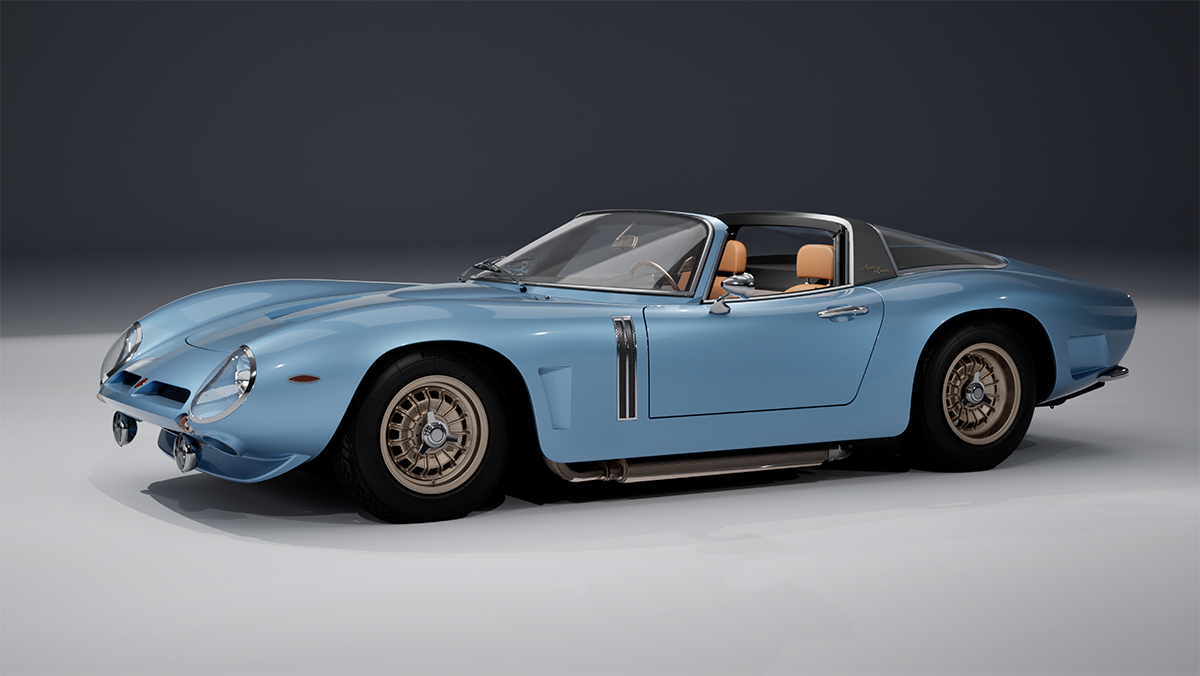
Over 60 years ago, Giotto Bizzarrini and Giorgetto Giugiaro envisioned an innovative approach to open-top driving: a removable roof panel and a beautiful structural arch, lighter and more elegant than a folding hood, company officials stated in a press release. This design lived only in an archive until today, with the announcement of the Bizzarrini 5300 Aperta Lusso. The first all-new production Bizzarrini since the ’60s, this Nuova Classica combines modern technology and luxury with ’60s design language and elegance.
Ten initial examples are planned, each hand-built to its owner’s specification, with the first commission, La Dolce Vita, already delivered to its owner.
From Bizzarrini’s Beginnings to the Aperta Lusso
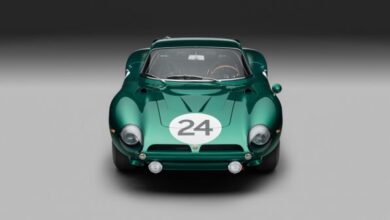
Born in Livorno in 1926, Bizzarrini left Ferrari in the “palace revolt” of 1961 alongside some of the finest engineers in Maranello. He set up his own design office and built aerodynamically sophisticated cars. His 5300 GT Corsa won its class at Le Mans in 1965.
The open-topped interpretation of the Corsa was always part of this vision. In 1962, the now-famous arch structure was first seen in a prototype by Giorgetto Giugiaro while at Bertone. The Bizzarrini company was focused on racing, so the design and drawings for the open car went into the archive and remained there following the shuttering of the company in 1969.
Decades later, in the company’s resurgence, those drawings became the foundation for the next evolution and the first modern-day Bizzarrini. The Aperta Lusso is the bond between the heritage and the future of the company, as it works toward production of the Giotto Hyper GT, noted the release.
The Aperta Lusso is engineered with modern materials, modern construction methods and with subtly incorporated modern technology. From the outside, it’s a ’60s car, but from behind the wheel it offers the comfort and reliability of the 21st Century.
Preserving a Classic Interior With Modern Tech
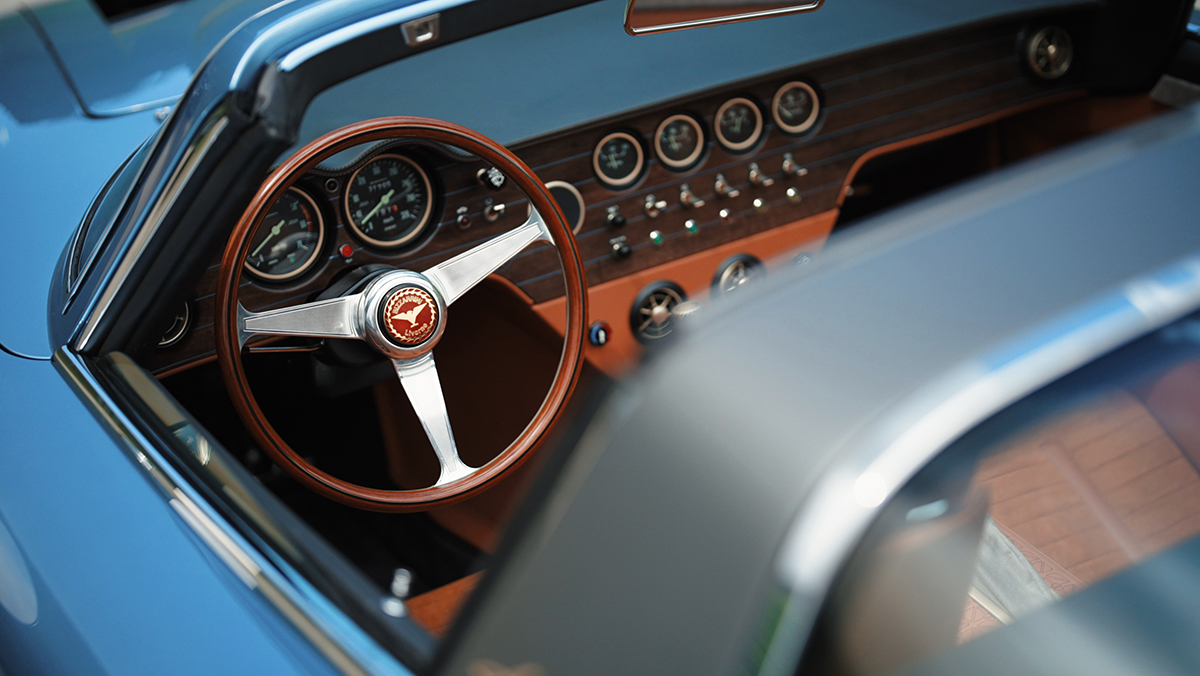
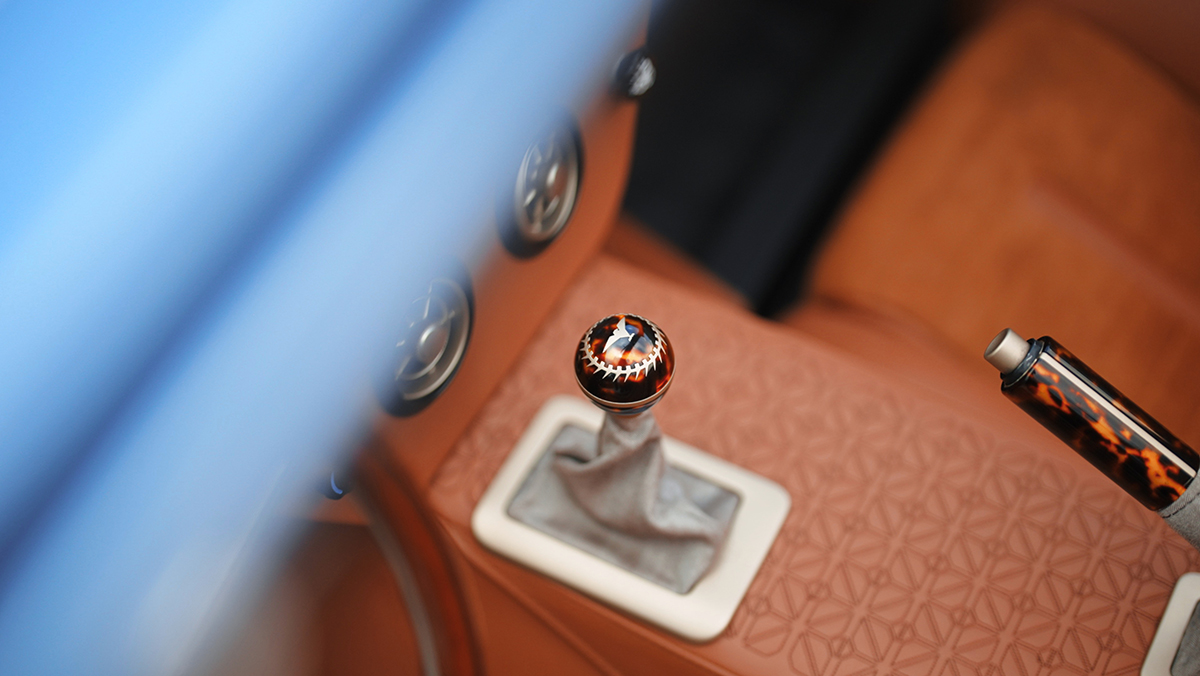
The interior materials were selected in collaboration with Zegna to ensure period character is preserved. La Dolce Vita, the first commission, features classic Italian styling with modern materials: seats trimmed in the finest leather, door panels in leather and Zegna fabric, the instrument panel sculpted from a single piece of wood, and the gear knob crafted in Italian tortoiseshell inlaid with gold details to create the Bizzarrini logo — a reference to the favorite sunglasses of this car’s Italian commissioner.
Air-con, premium frameless windows and modern weather sealing, adjustable steering column, MagSafe charging and sound system are discreetly integrated into the cockpit, ensuring the period feel of the car is undisturbed.
Suspension, Brakes & Steering
All-round double wishbone suspension is engineered to Bizzarrini’s original Le Mans-proven specification, with Koni “red” adjustable dampers valved specifically for the Aperta Lusso. The wheels are cast magnesium Campagnolo center-lock items, fitted with Pirelli tires sized 205/50 front and 255/60 rear, chosen to deliver an engaging, authentic driving experience with more contemporary levels of grip and traction, the company said.
Braking is by ventilated discs all round, with inboard rear discs in the race tradition—four-piston Alcon calipers front, two-piston Brembo rear; no servo assistance. Braking feel comes directly through the pedal, as it did in the original car.
Steering is rack and pinion, a significant advance on the original’s steering box, with electrohydraulic power assistance applied to the rack rather than the column to preserve feel. Calibrated to progressively reduce assistance above 40 mph, it delivers light, precise maneuverability at low speeds and proper road weighting on the open road. The column adjusts for reach and rake, positioning the Nardi wood-rimmed wheel where needed.
Body Structure & Removable Roof
The exterior of the Aperta Lusso is finished in a bespoke metallic color, named “Azzurro Gaia” in honor of the owner’s daughter. The pale blue is inspired by the waters of the Ligurian Sea, featuring a gold metallic fleck.
The car is built around a single-piece carbon-fiber composite body, one of the largest of its type in the world, and a distinctly different engineering proposition to the carbon tubs in which subframes are simply bolted, company officials said. Bizzarrini’s semi-monocoque bonded chassis approach yields a body that is simultaneously structure and sculpture.
Removing a roof from any vehicle can compromise its structural integrity. Here, a bespoke steel reinforcement assembly, designed by Bizzarrini’s engineers, optimized through finite element analysis and fabricated from aerospace-grade material, is added to the transmission tunnel along with a cross-body bar to surpass the torsional rigidity of the ’60s coupe.
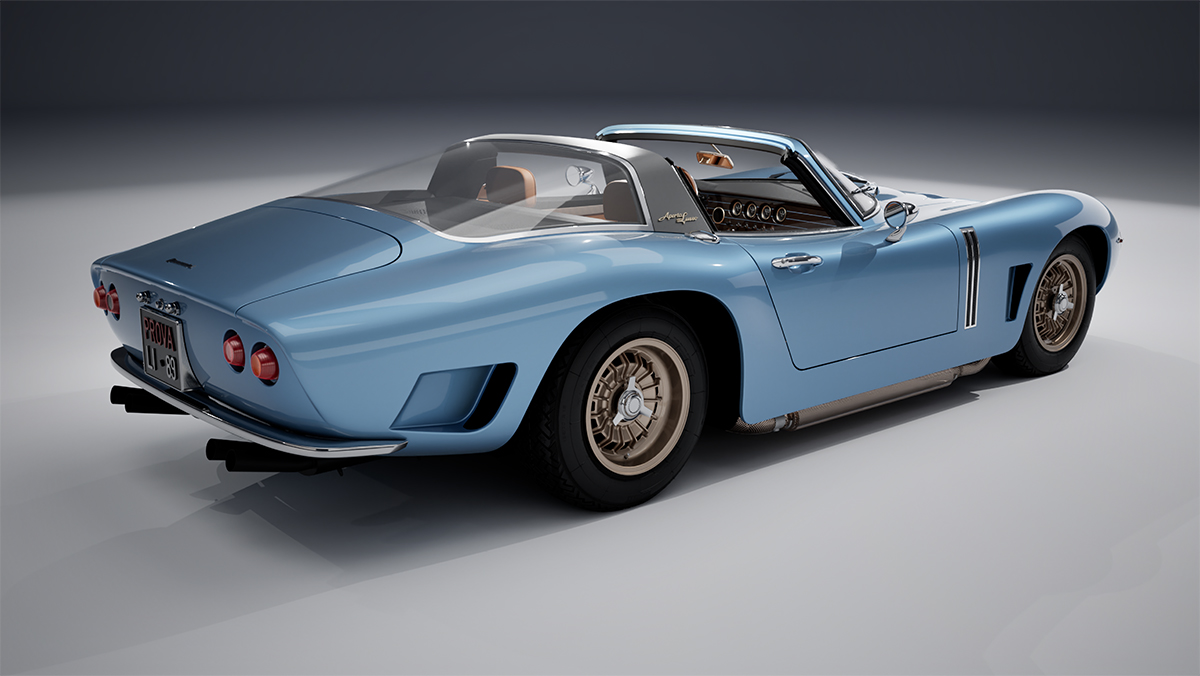
The two roof panels are also carbon fiber, light enough to be removed and stowed in the luggage compartment by one person. To ensure perfect sealing with the frameless glass windows, preventing water ingress and maintaining low cabin noise at high cruising speeds, the entire sealing system was designed from a clean sheet by Bizzarrini engineers to current best-in-class standards.
Powertrain Specs
The Aperta Lusso is powered by a 5.3-liter front-mid V-8, the same small-block unit Bizzarrini selected in the 1960s, positioned entirely behind the front axle centerline for ideal weight distribution. It produces well over 400 bhp, drives through a Tremec TKX 5-speed manual transmission and limited-slip differential, and will carry the Aperta Lusso to more than 175 mph. The short-throw gear lever connects directly into the gearbox for a crisp, mechanical shift. A 6-speed manual is available for those who prefer higher-speed refinement; final drive ratios can be specified to suit individual requirements.
Port fuel injection replaces the famous Weber 40DCOEs of the GT Corsa Revival, in favor of modern-day-to-day usability, though the system has been designed to look as though carburetors are fitted. The valved exhaust is hand-fabricated in Inconel, the high-nickel alloy typically reserved for race engines. Bizzarrini says that even with catalytic converters fitted as standard, it has been tuned to deliver a visceral note under load and a refined burble at idle.
Production Plans
Production is limited to 10 initial examples, each one a personal commission built to the owner’s exact specification. Further commissioning slots will be available with cars arriving in 2027.