Performance Clutches Allow Drivers to Put Their Best Foot Forward
Speed shops & builders know that the proper clutch kit can improve performance & drivability for all types of projects…

This article originally appeared in the April 2026 issue of THE SHOP.
Most performance drivers and racers view a manual transmission as non-negotiable when it comes to getting the most out of their vehicles. Their dedication has kept the performance clutch market viable and thriving, even as fewer standard transmissions are available from the original equipment manufacturers (OEMs).
Speed shops and builders know the proper clutch kit can improve performance and drivability, enhancing customer enjoyment and leading to repeat sales.
To help shops find success in the performance clutch market, suppliers offer tips on market trends, sales strategies and hot new products that allow retailers and installers to put their best foot forward.
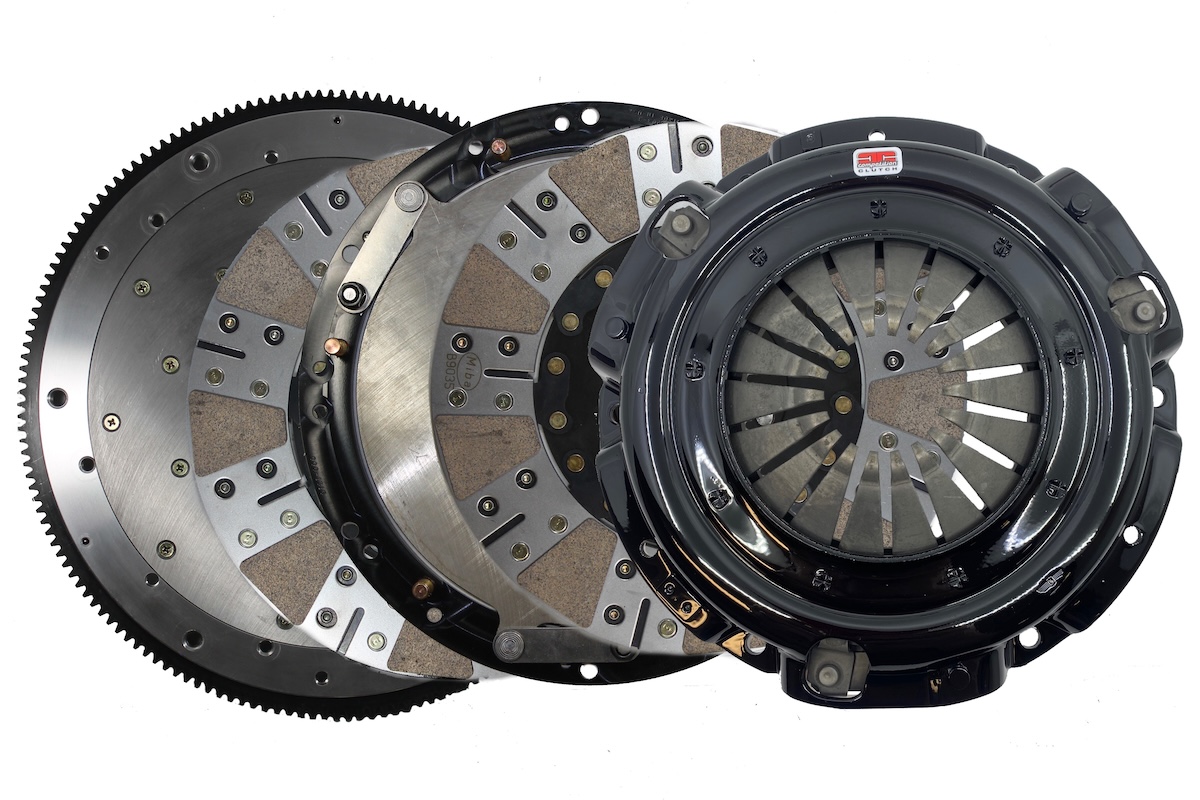
WIDE MARKET APPEAL
Not too long ago, the market was somewhat worried that a lack of new manual transmission offerings from the OEMs might limit the clutch market. Instead, it’s become firmly established, consisting of knowledgeable, enthusiastic racing and performance customers.
“There are fewer manual options, but the options that do exist are in very good cars and the drivers are very passionate about them,” says Geoff Gerko, owner of Mantic Clutch USA.
Despite customer familiarity, performance clutches are in no way a legacy product, with designs and approaches continually evolving.
“Over the past 10 years, the performance clutch market has shifted from a niche, power-centric parts arena to a data-driven, highly engineered, customer-oriented ecosystem,” says Rich Barsamian, vice president of sales and marketing for Advanced Clutch Technology. Products, he notes, are now:
- More application-specific
- Better engineered with advanced materials
- Tunable for multiple use cases
- Supported by richer data and documentation
- Responsive to digital research and retail trends
Bob Scheid, vice president of Competition Clutch, has seen platforms become broader and more inclusive, particularly in the import tuner market.
“No longer is it just Honda and Mitsubishi that rule sport compact,” he says. “Until recently, it would have been unheard of to swap a domestic engine into a sport compact or to see 2JZ engines being used in domestic swaps.”
Today’s offerings have moved from simply adding more clamping force to creating a more sophisticated, highly engineered clutch system, says Teddy Jernigan, technical coordinator for Exedy Globalparts Corporation.
“Advancements in materials allow us to get a higher coefficient of friction without adding clamping force and being able to make the clutches smaller and thinner while handling the same or more amount of power and heat,” he notes.
Roger Warner, director of customer satisfaction for Centerforce Clutches, explains how demand for higher holding capacity has increased.
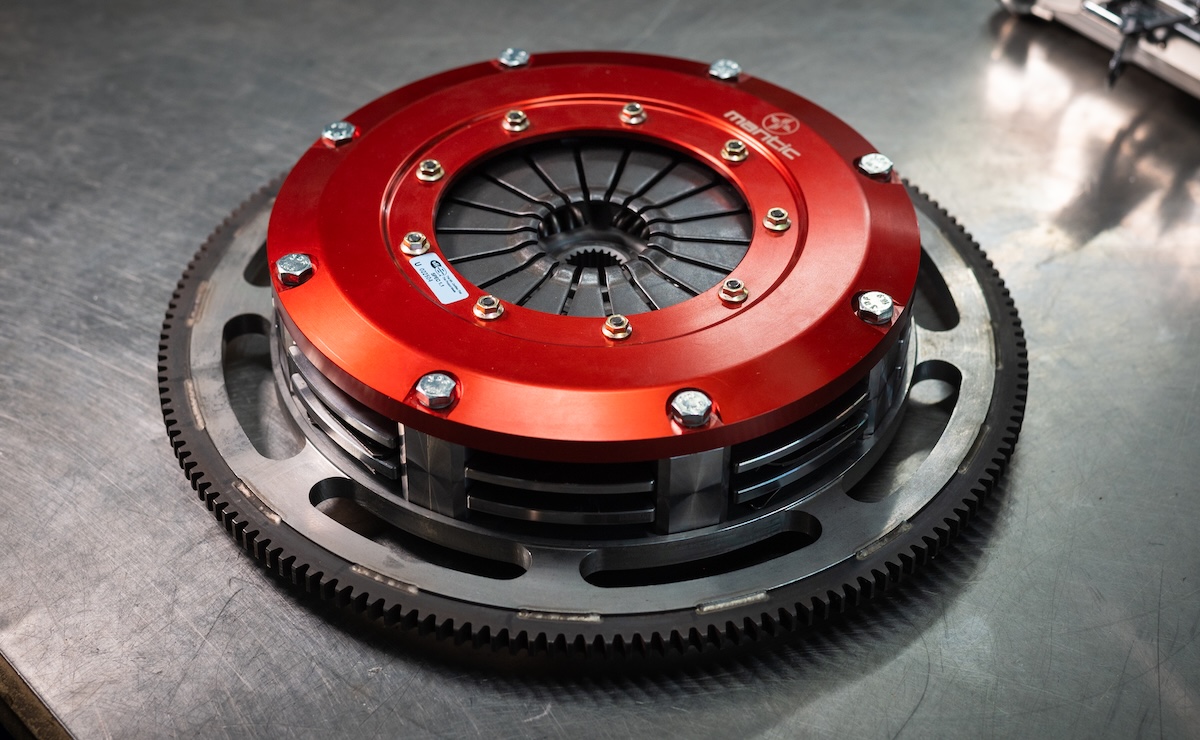
“With simple bolt-on modifications, turbochargers, nitrous systems and modern tuning capabilities, today’s vehicles can produce serious horsepower and torque while still being daily-driven. At the same time, OE manufacturers continue pushing performance boundaries. Some new vehicles now produce over 700 pound-feet of torque directly off the showroom floor—and many customers push those platforms beyond 1,000 horsepower,” he says. “Despite the massive power increases, customers still want the same things—a clutch that holds the power, maintains a comfortable pedal feel, operates quietly and offers smooth engagement. That’s a major reason the twin-disc market has grown so significantly.”
When it comes to clutch designs, Mike Norcia, marketing manager for RAM Clutches, concurs with the growing popularity and widespread acceptance of dual-disc clutch systems, as well as the market move toward the use of hydraulic release systems.
“The factories have used these for years, but now we see our hydraulic bearing kits used in nearly every form of street application including restorations, restomods, autocross, kit cars and late-model performance vehicles,” he says.
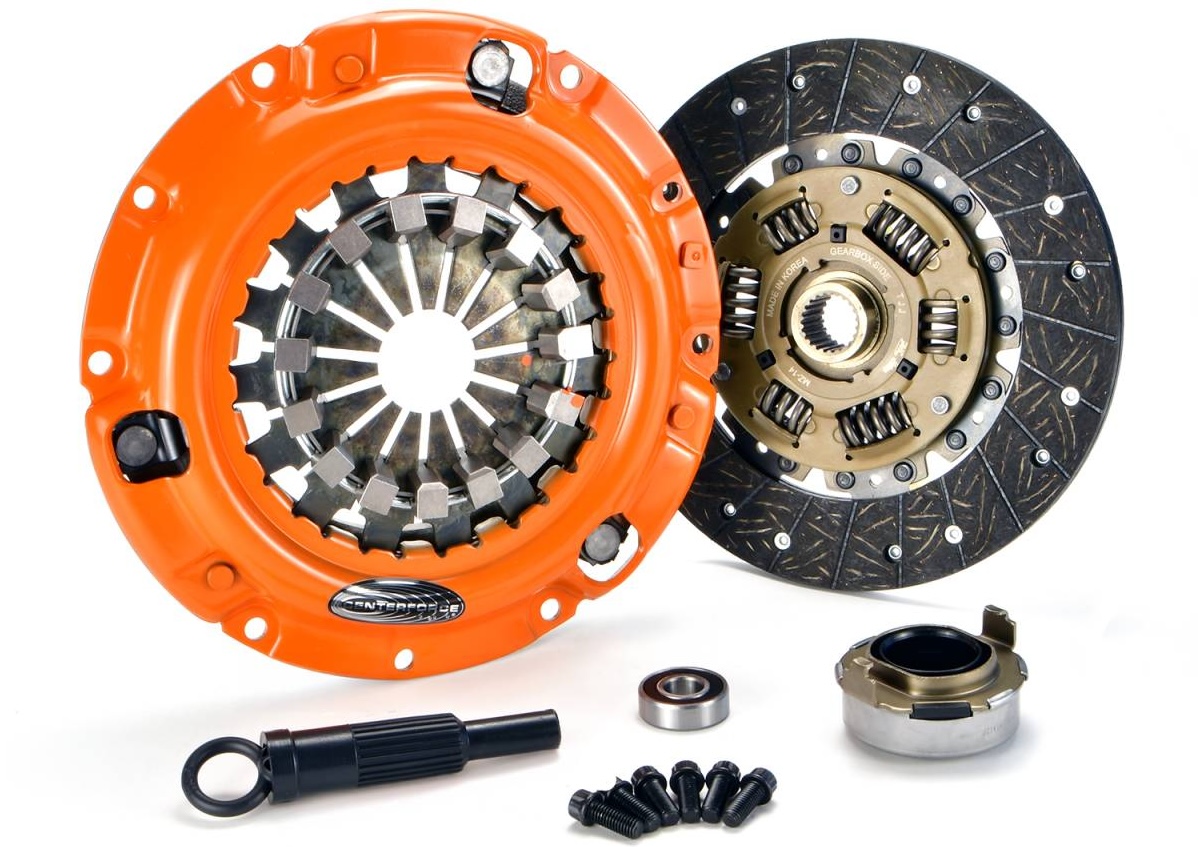
TAKE A NUMBER
Scheid says most customers judge a stage clutch strictly by the power it will hold.
“It is important to make sure the clutch matches the type of use it will see as well,” he says. “Match the disc material to the type of driving planned. If you use the wrong disc material you will get a customer that either burns their clutch up quickly or has a clutch that is unfriendly for the type of driving they do.”
Warner explains the importance of shops selling the clutch best suited for the customer’s needs and not simply what happens to be in stock.
“The worst scenario is getting a call from a customer who was misled and had the wrong clutch or flywheel installed for their application,” he says. “Those negative experiences can cost you customer loyalty, when they could have been avoided by properly understanding the product or making a quick call to the manufacturer for guidance. Matching the clutch to the customer’s modifications and intended use is critical.”
He also outlines some common installation issues including:
- Failing to test-fit the disc on the transmission input shaft spline
- Not verifying flywheel thickness, which can affect clutch fork geometry
- Dampening springs contacting flywheel-to-crank bolts
- Insufficient flywheel countersink depth for pressure plate bolt shoulder length
Finding that perfect match requires customer and vehicle information.
“There are a lot of factors when selecting a clutch—single vs. multi-plate, sprung hub vs. rigid disk, organic vs. metallic friction are just a few of the options,” says Jernigan. “Understanding the torque output and intended use of the vehicle are the keys. Our tech team gets many calls from people that have broken their transmission by putting a significantly higher-rated clutch in their vehicle.”
To maximize the impact of each project, Barsamian recommends viewing performance clutch upgrades as a complete system service instead of treating it as a simple parts swap.
“Failing to inspect and properly prepare components like the flywheel, release system, hydraulics and clearances often leads to engagement issues, premature failure or drivability complaints,” he notes. “Modern performance clutches require precise measurements and strict adherence to manufacturer specifications to perform as intended.”
Successful shops get to know their customers before recommending a clutch system.
“It’s critical to not only pick the correct parts for the vehicle based on the loads the clutch will see, but to also talk with the customer to determine what their expectations are regarding how the clutch will perform and drive in real-world situations,” says Norcia.
When it comes to installation, Gerko recommends always doublechecking the measurements for the CSC/slave cylinder.
“We stress checking the compression on the slave as that’s how it’s really used in the practical sense and you are more likely to spot a problem if you look at it that way,” he says.
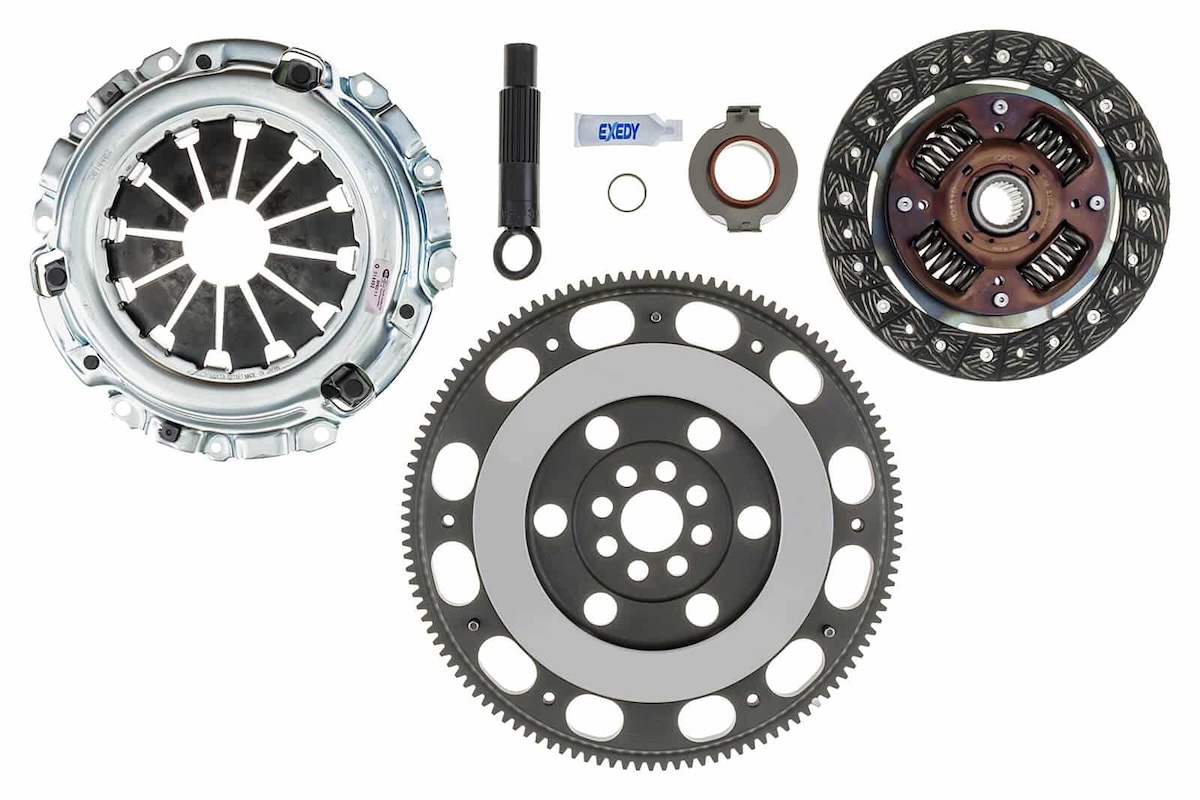
LEARNING CURVE
Norcia from RAM Clutches encourages shops to learn as much as they can up front about the vehicle and its planned use—not only to choose the correct clutch, but also to understand all that’s involved in installation.
“Many applications require a few extra steps in the installation process to ensure success versus simply swapping out a factory clutch,” he explains. “Take your time during the installation to ensure success the first time.”
Scheid from Competition Clutch suggests studying up on clutches as much as possible and then relying on suppliers to fill in the blanks.
“Know the product you are offering. I say that with catch. You will never be an expert with every line you carry,” he explains. “For that reason, rely on the tech department for that brand. Not every clutch is the same. That is why we keep an expert tech staff ready and willing to help. Know where to find expertise so you can pass that along to your customer.”
Becoming the local clutch expert earns shops a strong reputation and repeat business, says Jernigan from Exedy Globalparts Corporation.
“Educate yourself so that you can be confident in your recommendations, then educate your customers and instill that confidence in them,” he says. “When your customer has confidence that you know what you’re talking about, they will come back to you, they will bring their other vehicle to you and they will recommend you to their friends.”
Warner from Centerforce Clutches encourages promoting the “three-pedal” lifestyle.
“Display items such as short-throw shifters, clutch pedal assemblies, hydraulic throw-out bearings and other manual transmission components. These items do not take up a lot of floor space but reinforce performance identity and spark conversations,” he says. “Another strong strategy is having access to a test vehicle equipped with a manual transmission and a performance clutch. Letting customers experience the difference firsthand proves that not all clutches are created equal and builds confidence in the sale.”
Gerko from Mantic Clutch USA encourages shops to take the time to determine the best solution for each application.
“Reach out to the manufacturers on anything unique so we can help steer it in the right direction,” he adds.
Advanced Clutch Technology’s Barsamian again stresses the importance of addressing performance clutches as a complete system.
“Educating customers on related components—flywheels, hydraulics, bearings and break-in requirements—reduces comebacks while increasing ticket value and customer trust,” he says. “Shops that position themselves as clutch system experts, rather than parts installers, consistently see higher margins and repeat business.”

PERFORMANCE CLUTCHES
HOT PRODUCT: Mod-Twin Clutch
FEATURES & BENEFITS: High torque capacity and heat resistance in a compact, dual-disc design without sacrificing drivability; modular configuration to tailor engagement, pedal feel and durability for street or track use; forged and heat-treated components are fully rebuildable.
Advanced Clutch Technology
Rich Barsamian
VP Sales & Marketing
HOT PRODUCTS: Mazda Miata Clutch Kits and Low-Inertia Billet Steel Flywheels
FEATURES & BENEFITS: Options available for 1.6L and 1.8L Miata platforms; ability to choose from different flywheel weights and clutch kit configurations allows enhanced enjoyment without sacrificing drivability; complete clutch kits simplify the ordering process.
Centerforce Clutches
Roger Warner
Director of Customer Satisfaction
HOT PRODUCTS: Sport Compact Twin-Disc Clutch Kits
FEATURES & BENEFITS: Revamped lines for street and race applications; options include the 184 Series with small diameters and the ability to hold high power, and the 245 Series that offers a softer pedal feel and smooth engagement.
Competition Clutch
Bob Scheid
Vice President
HOT PRODUCTS: Stage 1 and 2 Clutch Kits for GR Corolla
FEATURES & BENEFITS: Both bolt directly to the OE flywheel and use the OE release bearing; Stage 1 delivers a stock-like feel and handles 400 pound-feet of torque at the wheels; Stage 2 offers a cerametallic compound and handles nearly 600 pound-feet of torque at the wheels.
Exedy Globalparts Corporation
Teddy Jernigan
Technical Coordinator
HOT PRODUCTS: Performance Clutch Kits
FEATURES & BENEFITS: Popular applications include GT350 Mustang, Hellcat and CT5 Blackwing; OE-like drivability; reduced moment of inertia for more power to the ground; rebuildable and upgradeable.
Mantic Clutch USA
Geoff Gerko
Owner
HOT PRODUCT: Concept 9.5 Dual Disc for Fox Body Mustang
FEATURES & BENEFITS: Designed to fit easily in 1986-95 Mustang applications using either an aluminum or steel bellhousing; utilizes a strap-driven floater plate for quiet operation and a sprung hub top disc to gain dampening on initial engagement; smooth-engaging metallic versions.
RAM Clutches
Mike Norcia
Marketing Manager