Arizona’s Fat Fender Garage Has a Simple Mission: ‘Build Cool Stuff’
The do-everything shop delivers truck restorations, custom creations for sale & specialized product manufacturing...
This article originally appeared in the February 2025 issue of THE SHOP magazine.
Imagine a 40-year-old carpenter becoming the head of a custom shop with 55 employees in Gilbert, Arizona. While Jason Noel might have once envisioned a life covered in sawdust, a chance decision by his father-in-law changed his career direction, and now Fat Fender Garage has become a major player in the truck restoration market.
Noel focused on woodworking in high school, taking all the shop classes he could find. He became a proficient carpenter and loved making things with wood. While his first car was a 1966 VW Beetle, he gravitated toward new cars and didn’t think much about working on them.
Later, his father-in-law built a large shop behind his house and soon bought an old truck to restore. Noel was asked if he would like to help, and when he realized the truck bed was made of wooden planks, he decided to lend a hand.
Soon, the truck was built, and his father-in-law suggested selling it on eBay. They made a $9,000 profit, which Noel’s father-in-law generously handed over.
The transaction showed Noel that there was money to be made buying and selling old trucks. He soon was finding pickups, fixing them up a little and then flipping them for sale. He recalled seeing how Chip Foose had restored a 1956 Ford that belonged to Foose’s father and realized restoration/customization could be a profitable business.
Noel initially gravitated toward 1953-56 Ford trucks, and when he realized he would need to create a business for his efforts, he came up with the name Fat Fender Garage.
GETTING ROLLING
Noel quickly realized he was not a proficient mechanic, he says, and hired an employee to assist with the mechanical aspects of each project. He then hired a painter to cover cosmetics. Meanwhile, Noel enjoyed the creative part of the job, helping customers imagine what these coveted relics could become. To this day, he often helps design the styling and rendering for his trucks’ interiors.

Noel was becoming so successful with his Fords that city zoning officials took notice, and he had to set up a new shop with 5,000 square feet in 2016. That year also marked the first of many customers who came to him wanting a truck restored. Until then, he had been flipping trucks and selling the final product to a buyer.
Noel was anxious to figure out how to make and keep his business successful. He spoke with Jonathan Ward, owner of ICON 4×4, who gave him two meaningful pieces of advice—one was to “build cool stuff” and the other was to not be afraid to “fire” customers who are not a good fit for your business.
Noel also talked to a marketing representative from Ringbrothers, who noted that their shop gained more market presence after selling the parts they initially had created for their custom builds.
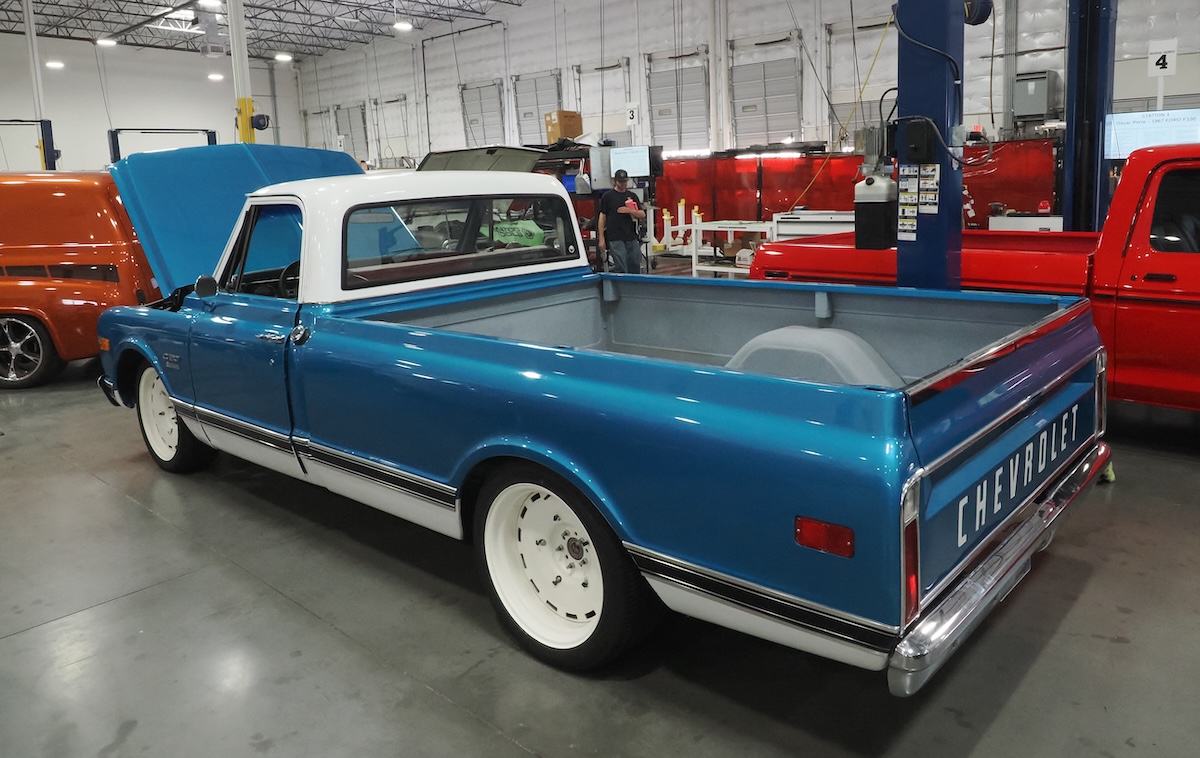
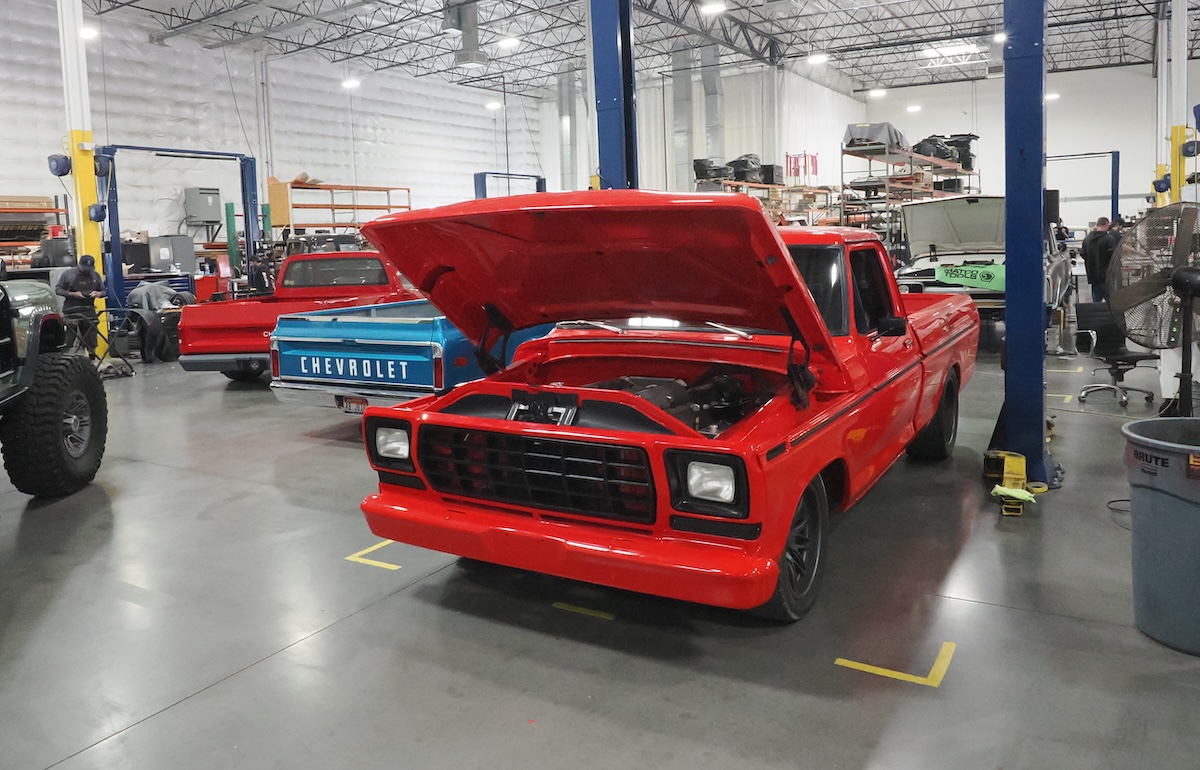
Recognizing that quality parts for Ford trucks were lacking, Noel and Fat Fender Garage looked to fill the void. In 2018, the business expanded into a 15,000-square-foot shop that served them well until 2024, when they moved to the current Gilbert location, boasting 43,000 square feet.
Today, Fat Fender employs seven full-time engineers focused on designing manufactured products, as roughly 40% of its business is in the parts arena. Noel calls it a winning recipe for his business.
“We got into designing parts. We were building better products, and we were into building cool stuff.”
The business also offers interior packages, shipping 10-15 kits as part of its overall average of 500 parts orders each month.
DOWN TO BUSINESS
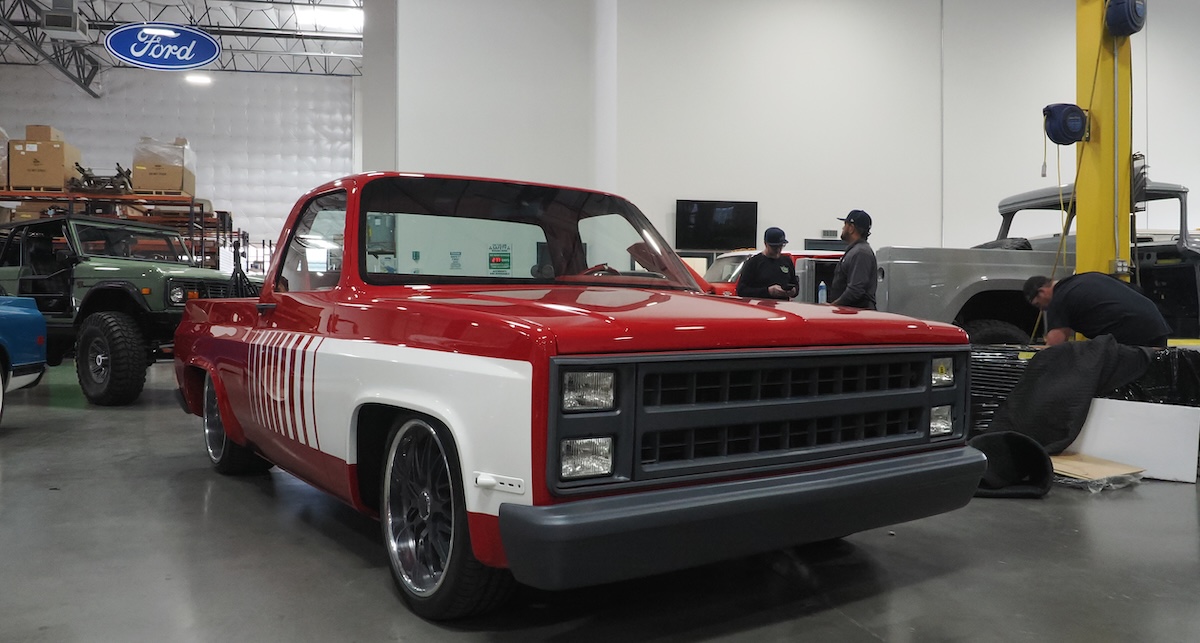
Fortunate to be at the forefront of the market when consumer interest in older Ford trucks ignited, Noel worked to quickly expand his shop’s reputation among Blue Oval fans. His business model is to “err on the side of quality,” building trucks that can be driven while developing new parts as needed.
Noel recognizes that he must be disciplined in following sound business practices, as implementing these builds is expensive.
“There were a lot of years we didn’t financially break even—it’s hard to make money,” he says.
The builder is always seeking ways to improve and admits that, in his early years, he made mistakes quickly but also learned from them just as fast.
Noel notes that many businesses cite their staffs as their greatest asset. He goes one step further, believing that employee relationships make or break a company.
As such, he encourages workers to offer new viewpoints and concepts, noting “I’m tired of being the guy with all the ideas. I like to collaborate.”
The goal is for customers to develop trust in the shop and crew. As such, Noel listens to clients’ ideas and tries to steer them to a final product they will both be proud of.
Once a truck project is launched, Fat Fender does all the work in-house other than powder-coating. Noel says an all-in approach helps control outcomes while adhering to required timelines.
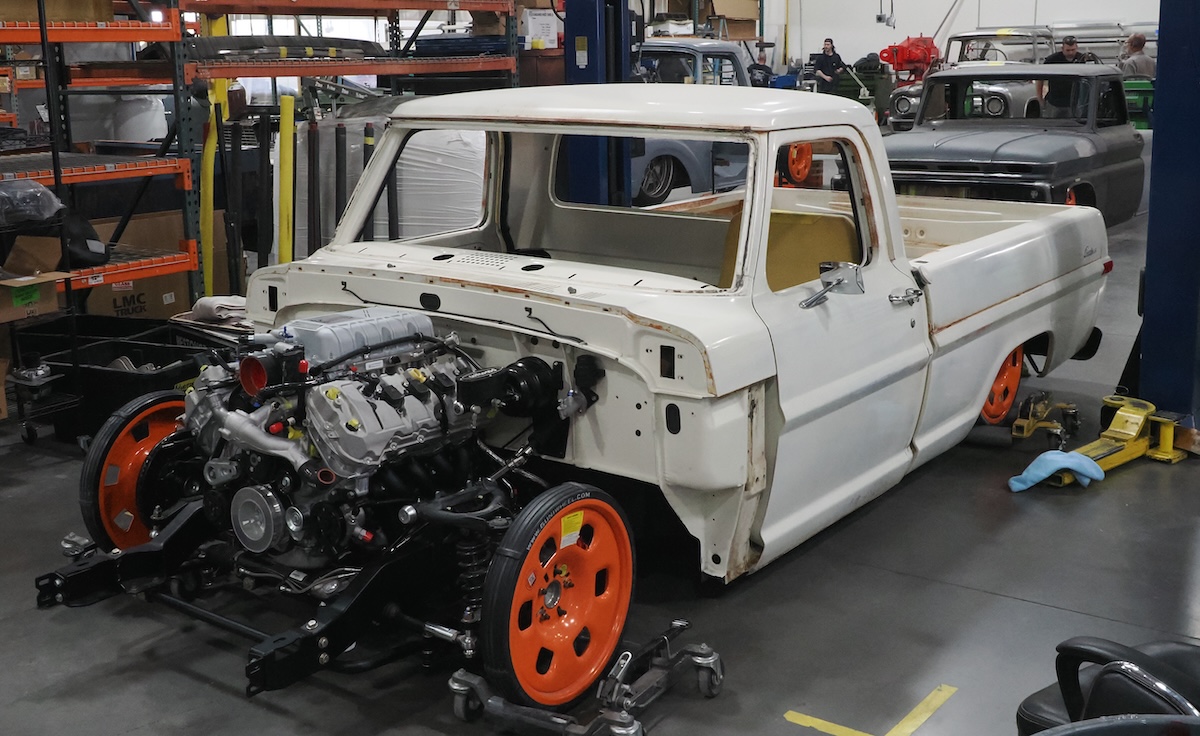
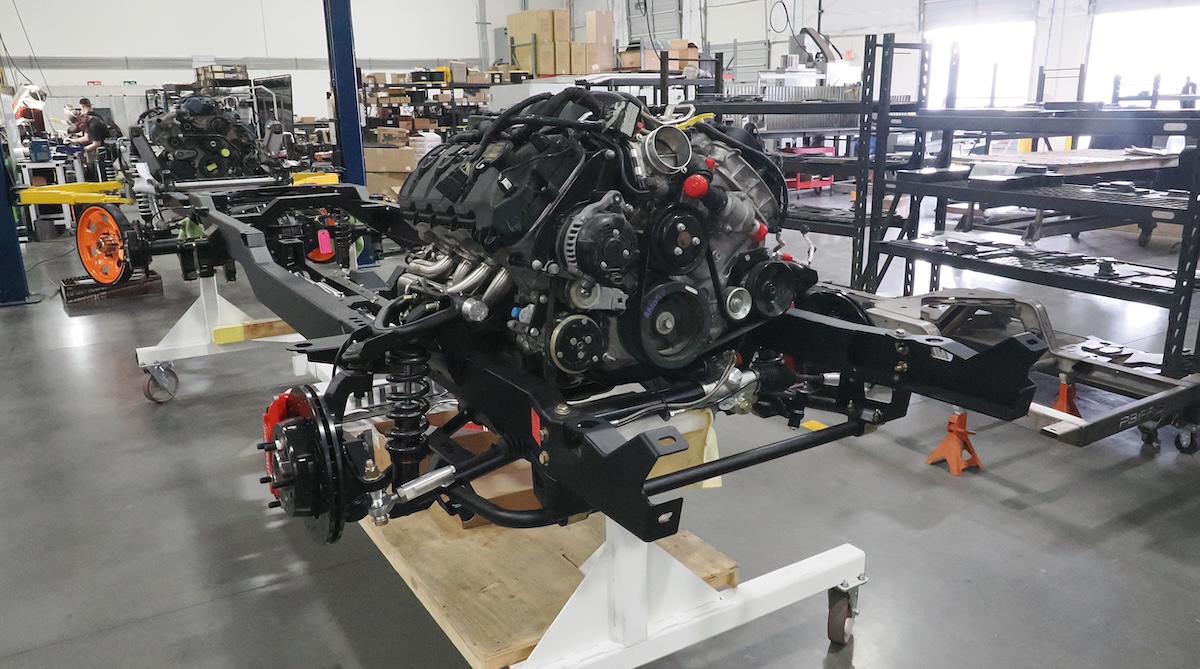
Besides its line of full-blown custom trucks (the Designer Series), Fat Fender also offers its Revival Series of builds. Once the shop has a Porterbuilt Fabrication PB Built chassis delivered, the crew can take a customer’s existing truck, add a new Ford Coyote engine and have it all wrapped up in 90 days.
As part of the process, customers can choose suspension packages with different drops and rear wheel openings. The timeframe lengthens, of course, if substantial body or paint work is needed. To handle its various projects, Fat Fender has split its crew, with one set working on custom builds and the other focusing solely on the Revival trucks.
Fat Fender is not a service center, and Noel says the shop rarely needs to redo any of its work. All trucks undergo 1,000 “test” miles before the keys are turned over as part of a process to detect any minor flaws that need to be addressed.
A MARKET WITH HIGH DEMAND
Noel, 52, has strong views on the future of the truck restoration field. He sees customers wanting high-quality builds done right, with short delivery timelines.
Drivers may desire modern upgrades such as traction control and antilock brakes, he notes, but overall, they appreciate a more analog feel to the truck. He’s observed the public pulling back from too much technology, saying, “they want to drive, not swipe.”
Fat Fender creates restored trucks that can be driven daily and not just on weekends. Noel adds that, while he believes the current movement toward electric vehicles will be short-lived, fuel-efficient trucks will always be in demand.
Increased consumer demands may even force some smaller shops to grow or develop partnerships, he predicts, noting that “future restoration shops will be capable of producing 50-100 restored vehicles a year.”
With a winning formula, Noel and Fat Fender have developed a business model and processes that have produced industry innovations, accolades and plenty of satisfied customers. The former carpenter ended up building something special.