How AI Is Closing the Technology Gap for Independent Auto Shops
Independent shops can close the tech gap with AI-first vehicle management systems that reduce diagnostic time...
By David Prusinski
For decades, independent shops have built their reputations on trust, skill and personal relationships with drivers. Yet today, even the most experienced technicians face a growing challenge—vehicles are becoming rolling computers.
Each new model year brings more sensors, advanced driver assistance systems and software-driven diagnostics. While major dealership networks and national chains invest heavily in technology to keep up, independent shops often find themselves constrained by time, cost, legacy processes and a lack of access to connected systems that enable scalable growth without adding more staff.
The result? A widening technology gap. Independent shops spend too much time manually diagnosing problems, waiting for parts or navigating complex service bulletins, which create “bay hogs” that tie up needed shop time. In addition to that, owners and technicians are often bogged down managing tedious and time-consuming customer communication, scheduling and follow-ups—all of which further drain productivity. Each delay means lost billable hours and frustrated customers, not because technicians lack skill, but because they’re burdened with systems that haven’t evolved fast enough.
Fortunately, that gap is beginning to close. A new generation of AI-first vehicle management systems is putting advanced capabilities into the hands of every shop, and it’s redefining what “competitive advantage” means in completing automotive projects.
The Old Bottleneck of Guesswork & Downtime
Every independent shop owner knows the story: A vehicle’s check-engine light comes on, and the diagnostic process begins. Even with a scan tool and online databases, it can take hours to isolate the true cause of a fault. Sometimes the first repair doesn’t fix it, requiring a second round of diagnostics and another visit from the customer.
These “second fixes” are costly. They slow down bays, eat into profitability and erode customer trust. At the same time, waiting for parts, often ordered only after an issue is discovered, compounds the delay.
Large dealership groups have traditionally had the advantage because they can invest in proprietary software, data integrations and OEM-backed systems that automate parts of this workflow. Independent shops, on the other hand, often must rely on experience, intuition and manual lookups. But as vehicles become more complex, even decades of expertise can’t compete with a constantly learning machine.
AI as the Great Equalizer
Artificial intelligence has become a buzzword in every industry, but for independent shops, its value is tangible and immediate. Unlike the intimidating enterprise tools of the past, today’s AI-driven systems are designed to be accessible, affordable and plug-and-play.
An AI-first vehicle management system doesn’t replace the technician; it amplifies their expertise. By continuously analyzing diagnostic codes, service histories, environmental factors and repair outcomes across thousands of vehicles, the system can prescribe likely fixes within seconds.
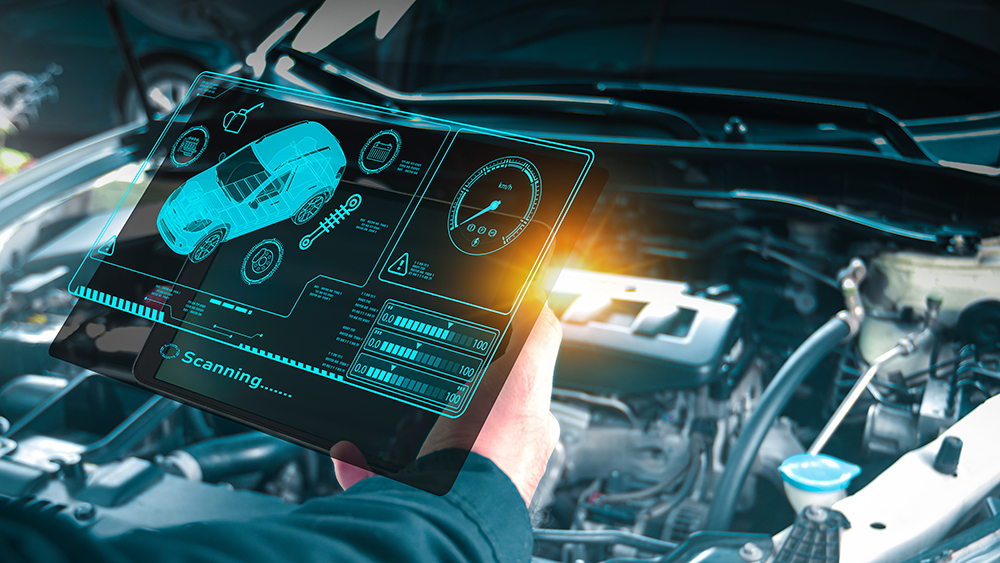
Imagine scanning a vehicle and having an AI tool generate a ranked list of probable causes and repair steps, complete with verified parts availability and labor estimates. Instead of sifting through pages of error codes, the technician moves straight to confirmation and repair.
The result is a higher first-time-fix rate—meaning any arising issues can be resolved more quickly, customers leave satisfied and shops can take on more business without adding staff.
Turning Data Into Decisions
The real power of AI in the repair environment lies in pattern recognition. Vehicles across different makes and models often share components or exhibit similar failure trends. AI can connect those dots instantly, recognizing a systemic issue long before it becomes obvious to a human.
For example, if hundreds of similar vehicles across the network start showing related transmission faults after a certain mileage, the system can flag that insight for every connected shop. When the same issue appears in your bay, you will know which fix has proven most successful elsewhere.
This type of networked intelligence was once limited to OEM service centers or national chains with integrated data systems. Today, independent shops can tap into that same collective knowledge without the heavy investment or IT burden.
From Reactive to Predictive
Beyond fixing vehicles faster, AI helps shops transition from reactive repair to proactive maintenance. By analyzing telematics and historical service data, it can predict upcoming issues based on usage patterns or component wear. This opens new revenue streams for independents, offering customers preventive service reminders or subscription-based maintenance programs that compete directly with dealership offerings.
Predictive insights also help shop owners better manage their own operations, scheduling staff and ordering inventory in anticipation of likely demand.
While some technicians worry that AI could replace hands-on expertise, that’s simply not the reality. The most effective systems are collaborative, not competitive. They do the heavy lifting of data analysis, freeing technicians to focus on what they do best—customizing, restyling, upfitting and building relationships.
Think of AI as the new “shop assistant” that never sleeps. It helps prioritize work, avoid missteps and reduce mental fatigue from information overload. In an era where technician shortages are a real concern, that efficiency boost can make the difference between thriving and merely surviving.
Future-Proofing the Independent Shop
Independent shops are at an inflection point. Vehicles will only grow more software-defined. The shops that embrace accessible AI now will not only compete, but they’ll also lead.
Just as computerized diagnostics once separated the modern shops from those left behind, AI-first systems are the next frontier. The technology is no longer reserved for large fleet operators or OEM-backed service centers. It’s being built with independent shops in mind, so it’s easy to adopt, cloud-based and continually improving.
For shop owners, the question is no longer whether to adopt AI, but when. Those who move early will capture the benefits of faster turnaround times, smarter resource use and stronger customer loyalty.
The goal isn’t to replace the art of the automotive technician; it’s to remove the unnecessary friction that prevents skilled technicians from performing at their best.
In a business where every hour and every project counts, AI is not just a tool; it’s a competitive equalizer. It levels the playing field and ensures that the independent shop, long in the heart of the automotive community, remains vital and profitable well into the next generation of mobility.
 David Prusinski
David Prusinski is the CEO of VMS.AI, a leader in AI-based uptime management. He is a 30-year technology veteran with 15 years dedicated to pioneering connected vehicle solutions. He most recently served as the global CRO for Integrated Services at Ford Motor Company, scaling connected services for both the fleet and retail sectors.