

- KPI – September 2026: The Brief
- KPI – September 2026: State of Manufacturing
- KPI – September 2026: State of Business – Automotive Industry
- KPI – September 2026: Consumer Trends
- KPI – September 2026: Recent Vehicle Recalls
Employment
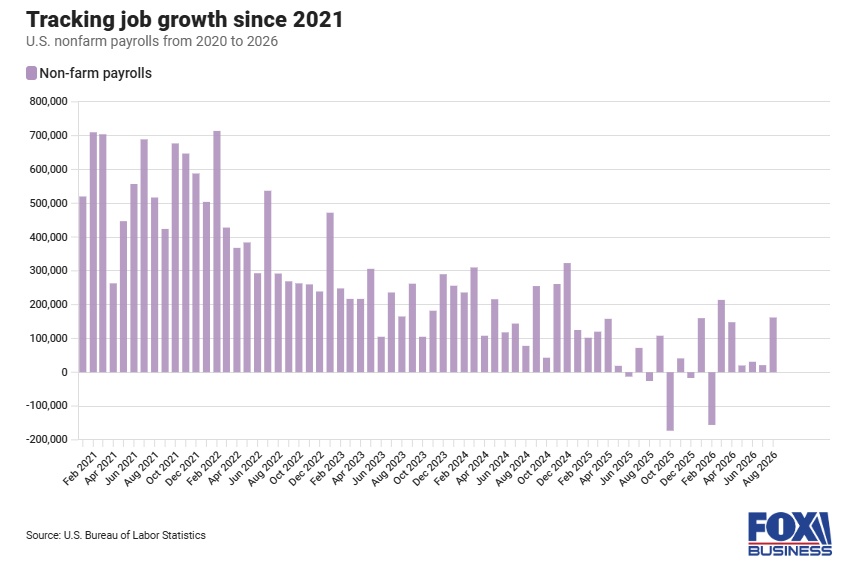
Total nonfarm payroll employment increased by 162,000 in August – above estimates of 53,000. Employment increased in food services and drinking places, as well as in local government education, but declined in the information industry.
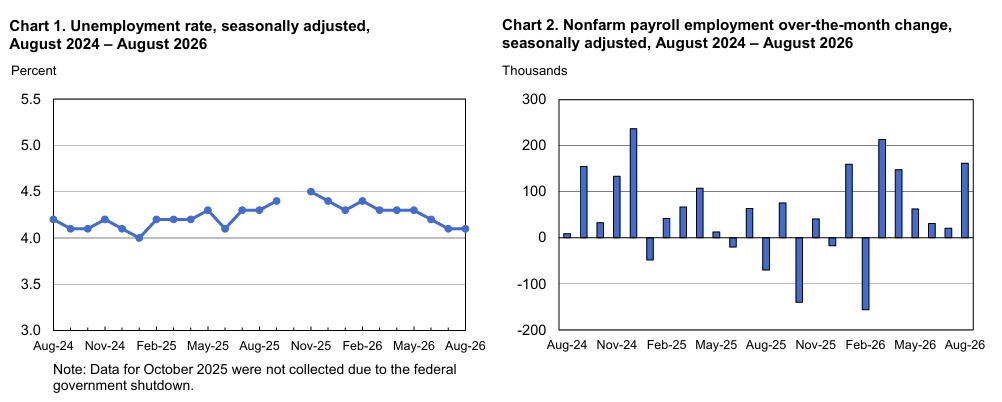
According to the U.S. Bureau of Labor Statistics, the unemployment rate and number of unemployed persons remained at 4.1% and 7 million, respectively. The labor force participation rate increased to 61.6%, with long-term unemployment accounting for 27%.
CNBC says the data was largely consistent with what Fed officials have characterized as a stable labor market, which led to rate hikes in mid-September. At the time of the release, the news outlet reported stock market futures moved mostly lower, while Treasury yields, particularly at the short end where Fed policy has its greatest impact, rose sharply.
“Net, net, the labor market is alive and well and generating thousands of new jobs to help keep economic growth squarely in the plus column,” says Chris Rupkey, chief economist at Fwdbonds.
By Demographic
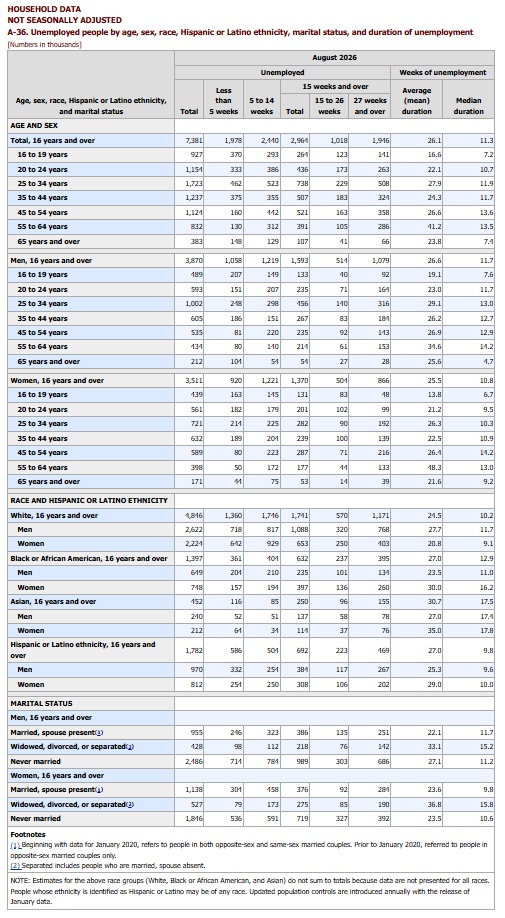
This month, unemployment among the major worker groups: adult women – 3.5%; adult men – 4%; teenagers – 14.1%; Asians – 3.2%; Whites – 3.7%; Hispanics – 4.8%; and Blacks – 6%.
Last month, unemployment among the major worker groups: adult women – 3.7%; adult men – 3.9%; teenagers – 12.1%; Asians – 4%; Whites – 3.6%; Hispanics – 4.6%; and Blacks – 6.3%.
By Industry
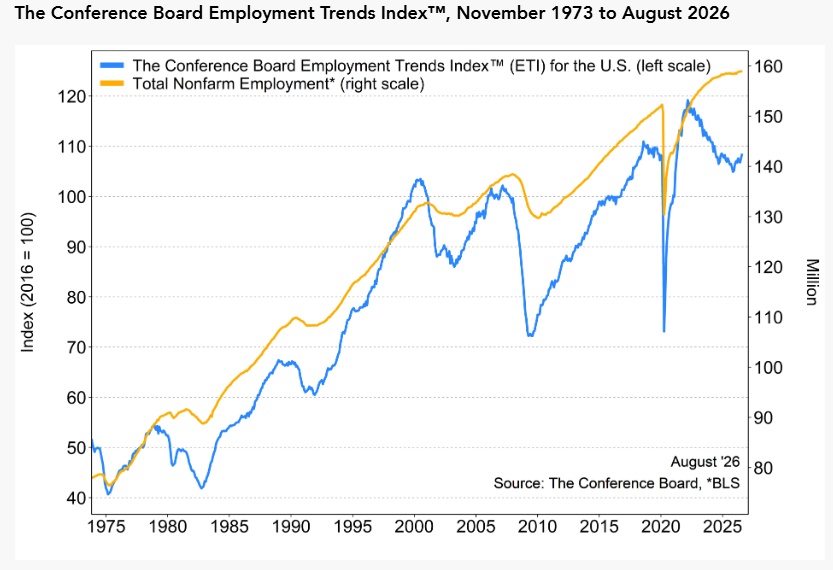
The Conference Board Employment Trends Index (ETI) rose to 108.53 in August, from an upwardly revised reading of 107.76 in July.
“The ETI increased for a second consecutive month in August and is now up 2% from its level one year ago,” says Conrad Qi, economic data scientist associate at The Conference Board. “Although they were mixed in August on a month-over-month basis, all eight components of the ETI delivered positive average contributions over the past six months. This suggests support for continued job growth after nonfarm payrolls grew by 162,000 in August.”
According to Qi, the largest positive contributions to the ETI came from declines in the ratio of involuntarily part-time to all part-time workers and the share of consumers reporting that jobs are hard to get. The involuntary part-time ratio fell to 16.2% in August from 17.4% in July, signaling less underemployment. The share of consumers who reported jobs are “hard to get”—an ETI component from the Consumer Confidence Survey—declined to 19.5% in August from a revised 21.7% in July, indicating improved perceptions of current job availability.
On the contrary, initial claims for unemployment insurance had the largest negative contribution to the ETI in August. However, claims remained below their June level, suggesting only a modest pickup in layoff activity. The percentage of [small] firms with positions not able to fill right now also fell to 35% in August from 36% in July but remained elevated by historical standards. Job openings were estimated to have edged down by 26,000 to 7.24 million.
Click here to view more detailed information by industry.