
The following article was provided by Avery Dennison.
Winter is here, daylight hours are shorter, and the temperatures have dropped. The signage and graphics industry does not have the luxury to wait for warmer weather to do installs, as the job must go on. There are a few things to note when applying vinyl as the temperature begins to drop.
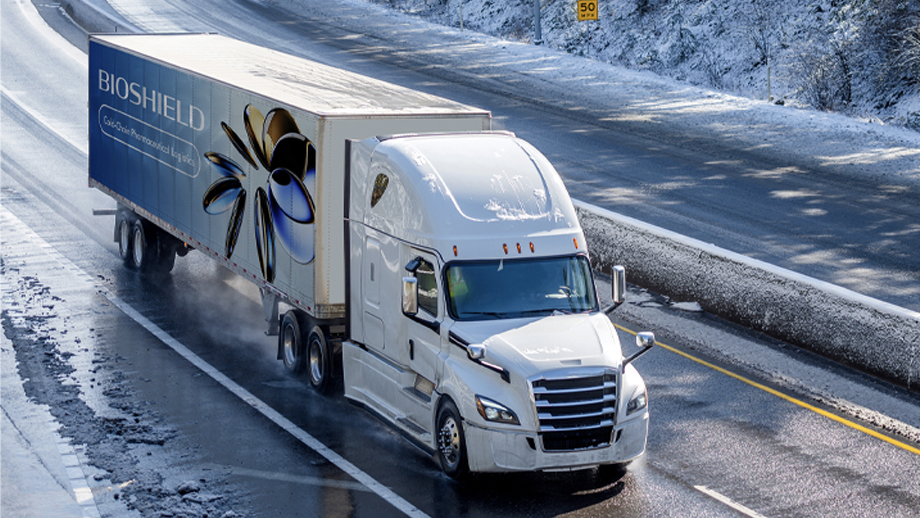
As a graphics converter, when you receive your film to produce graphics for a job, it is very likely that it has been sitting in the back of a delivery truck for a day or two as it is being transported from the supplier to your door. Before doing any type of converting—such as printing, plotter cutting or applying the film—it is important to allow it to properly acclimate. This is done by letting the film rest until it comes back up to ambient temperature. Trying to convert the film before it comes to ambient temperature can cause a variety of issues, such as:
1. Film Instability
- Tunneling (Liner Separation): The film and the release liner expand and contract at different rates. If a cold roll warms up too quickly, unrolled, the vinyl may expand faster than the liner, causing it to bubble and detach from the backing.
- Moisture Condensation: Similar to your glasses fogging up when entering a warm room, cold vinyl can develop microscopic condensation on the surface. This moisture acts as a barrier, repelling inks and adhesives.
- Loss of Dimensional Stability: Vinyl has “memory.” If you force it through a machine while it is thermally contracting or expanding, it will eventually try to revert to its original state. This leads to the graphic shrinking or curling at the edges after it has been installed.
2. Printing Issues
- Head Strikes: Temperature disparities often cause the edges of the media to curl. As the print head moves from side to side, it can physically strike these raised edges, ruining the print and potentially damaging expensive print heads.
- Poor Ink Absorption & Curing: Cold vinyl pores are “closed” and tight. Solvent inks require the material to be receptive to “bite” into the surface. If the vinyl is cold, the ink may sit on top rather than absorbing, leading to pooling, mottling (splotchy colors), or ink that smears because it didn’t gas out properly.
- Color Inconsistency: Because the ink isn’t absorbing at the standard rate, your color profiles will likely be inaccurate, leading to prints that look washed out or have shifting hues.
3. Plotter Cutting Issues
Vinyl becomes significantly harder and more brittle when cold.
- Shattering and Chipping: Instead of slicing smoothly, the plotter knife blade may chip or shatter the vinyl along the cut line. This results in jagged edges that look unprofessional.
- Incomplete Cuts: A standard blade pressure (downforce) is set for room-temperature vinyl. Cold vinyl is harder, so that same pressure might not cut all the way through, leaving you with a perforated cut that won’t weed.
- Tracking Issues: As the material warms up during the long cutting process, its dimensions change slightly. This can cause the grit rollers to lose their precise tracking, resulting in long cuts (like pinstripes) drifting off-center or diagonal cuts not meeting up perfectly.
- Weeding Nightmares: This is the most common frustration. If the adhesive is cold, it becomes brittle. When you try to weed (removing excess vinyl), the adhesive may snap or lift the actual design off the liner rather than staying put.
4. Adhesive Failure
- Brittleness: In cold states, pressure-sensitive adhesive (PSA) loses its tack. It won’t bond to the transfer tape or the substrate.
- Aggressiveness (Over-heating): Conversely, if the vinyl was stored in a hot warehouse and hasn’t cooled down, the adhesive can become “gooey” and overly aggressive, making it impossible to transfer or causing it to leave heavy residue on your equipment.
Preparing the Substrate
It’s critical to ensure all chemicals, such as road salt and de-icing agents often used in winter, are thoroughly washed off the vehicle before application, as these residues can interfere with adhesive performance. The temperature of the substrate (substrate is the surface where the vinyl is being applied) should also be taken into consideration when applying vinyl. Adhesives don’t like cold temperatures, and applying vinyl to cold surfaces can cause the adhesive to be less tacky. Applying vinyl to a cold substrate can create a risk of the vinyl not adhering correctly.
The average minimum temperature for applying vinyl to a substrate is 50°F. Avery Dennison’s film Minimum Application Temperature range can be found on the Product Data Sheets on the Avery Dennison Graphics website. It is important to always check the website for the most current information on products before choosing a film.
If you look at the MPI 1105 Series Product Data Sheet, you will see a range of recommended minimum temperatures for applying this film based on the different variations of substrates. For example, for flat surfaces, the minimum application temperature is 45°F (7°C); for flat with rivets is 50°F (10°C); finally, 60°F (16°C) for complex curves and watercraft. There are films, such as the MPI 2126 HT EZ and MPI 1106 HT EZ, that can be applied at 40°F (4°C). An infrared thermometer should be used to tell the substrate temperature when you are in doubt.
Service Temperature
Another temperature to be aware of is the service temperature. This is the temperature that, once the vinyl is installed, it can be exposed to. Both the MPI 2126 HT EZ and MPI 1106 HT EZ have a service temperature range of -40°F to 180°F (-40°C to 82°C), while the MPI 1105 series has a service temperature range of -50°F to 180°F (-45°C to 82°C). Exposure to temperatures outside this range can cause premature vinyl failure.
Dwell Time
Another important note is the necessary dwell time at or above the minimum application temperature. The MPI 1105 Series requires the vehicle to be kept at or above minimum application temperature for as long as possible—at least 12 hours is recommended. It takes time for the adhesion to build to an acceptable value before the graphic is put into service. If the graphics are exposed to cold temperatures before the adhesion has a chance to build, it will result in lifting of the vinyl. For additional security, especially in areas prone to lifting like the bottom edges on cars, trucks and vans, consider using an approved edge seal tape.
Proper acclimation and ensuring adequate post-application dwell time are your most important defenses against cold-weather failure. By following these preparation steps, you ensure maximum adhesion and the long-term success of your graphics, no matter how low the temperature drops.
Prepare Yourself
Now it’s time for those of you up north to make sure your snow blower still works, dig out your winter clothes and enjoy some hot chocolate.
Learn more graphics tips and techniques at https://graphics.averydennison.com/en/home.html.
Story Contributors:
- Cindy Richards, regional sales manager, Avery Dennison Graphics Solutions
- Molly Waters, Sr. regional technical specialist, Avery Dennison Graphics Solutions