
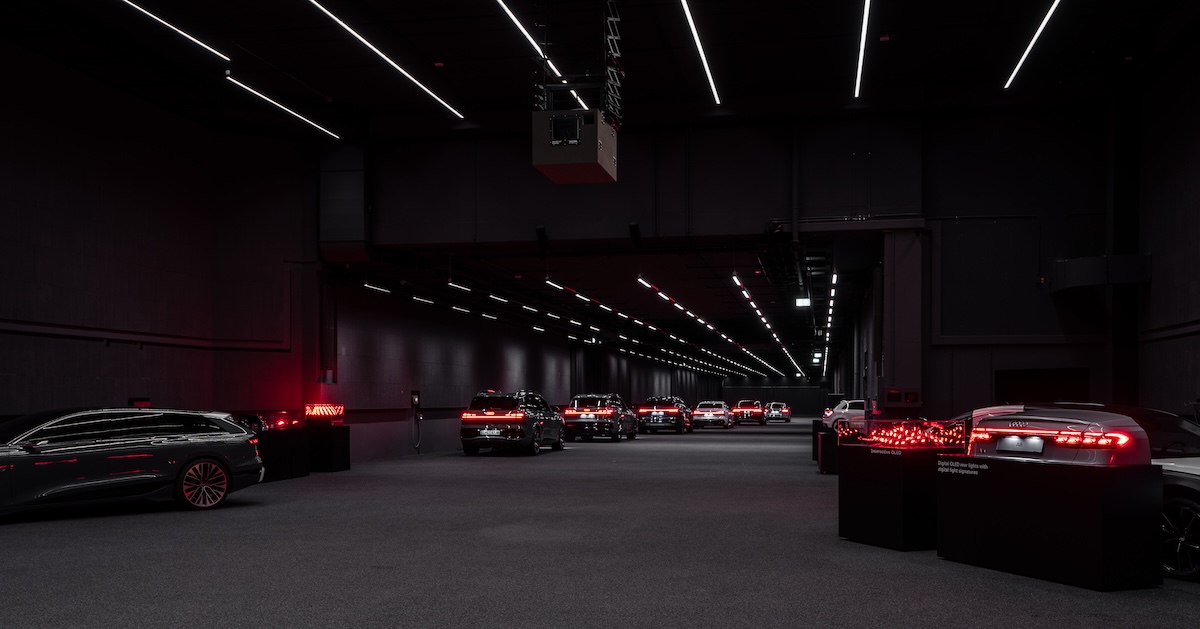
Universal Display Corporation (UDC) and Audi are celebrating 10 years of OLED technology in Audi production vehicles, marking a decade of innovation that has transformed OLED lighting into one of the automotive industry’s most distinctive, energy-efficient and technologically advanced lighting platforms.
Since the introduction of OLED rear lighting in the Audi TT RS in 2016, OLED technology has evolved from a breakthrough design innovation into a sophisticated platform that combines ultra-thin form factors, homogeneous area illumination, design flexibility and advanced functionality.
Today, digital OLED lighting systems enable highly customizable digital light signatures, enhanced visibility features and increasingly sophisticated communication capabilities, redefining the role of lighting within the vehicle and creating new opportunities for vehicle differentiation, advanced communication functions and enhanced safety, according to company officials in a press release.
“We congratulate Audi on reaching this important milestone and celebrating 10 years of bringing OLED technology to the road,” said Steven V. Abramson, president and chief executive officer of Universal Display Corporation. “The continued advancement of OLED automotive lighting over the past decade demonstrates what can be achieved when advanced materials, engineering and design come together around a shared vision. Audi’s commitment to innovation has helped expand the possibilities of automotive lighting, and we are proud that Universal Display’s OLED technologies and energy-efficient phosphorescent materials have contributed to this journey. As OLED lighting continues to evolve, we see significant opportunities to further extend its capabilities to support the next generation of automotive lighting and communication applications.”
Collaborative Effort
The progress of OLED automotive lighting reflects collaboration across the OLED ecosystem, bringing together advances in materials, panel technology and vehicle integration, officials noted. Audi, Universal Display and OLED developer OLEDWorks continue to contribute their respective expertise as OLED lighting evolves toward increasingly sophisticated designs, functionality and communication capabilities.
“Over the past 10 years, OLED technology has fundamentally expanded the possibilities of automotive lighting,” said Dr. Werner Thomas, project manager OLED-lighting of Audi AG. “OLED lighting has enabled us to create distinctive customer experiences while continually reimagining the role of light within the vehicle. As mobility advances, we believe OLED technology will remain an important platform for innovation, differentiation and future vehicle interaction and communication.”
Looking ahead, advances in OLED materials, manufacturing technologies and system integration are expected to further expand the role of OLED lighting across automotive applications, allowing for thinner, more exotic lighting designs. Building on a decade of innovation, Audi, Universal Display and OLEDWorks continue to explore new possibilities for OLED lighting that enhance vehicle design, functionality, communication and the overall mobility experience.
“OLED automotive lighting exemplifies what can be achieved when expertise from across the value chain comes together to advance a common vision,” said David DeJoy, chief executive officer of OLEDWorks. “Collaboration among materials innovators and automotive leaders has helped transform OLEDWorks’ OLED lighting into the highly differentiated Atala automotive OLED lighting platform it is today. We are proud to work alongside Audi and Universal Display as we continue exploring new opportunities for vehicle design, functionality and driver engagement.”